I Thought My Son's Girlfriend Was Hiding Something Terrifying in My Kitchen at Night. The Truth Was More Heartbreaking Than I Could Have Imagined.
I Thought My Son's Girlfriend Was Hiding Something Terrifying in My Kitchen at Night. The Truth Was More Heartbreaking Than I Could Have Imagined.
The Quiet House
My name is Marcia, I'm 59, and after my husband passed, I learned how quiet a house can get when it's just you and the ticking of the kitchen clock. That sound—tick, tick, tick—sometimes feels louder than my TV ever did. It's been three years now, and I still catch myself setting two coffee mugs on the counter each morning before reality catches up. I work part-time at the elementary school office, mostly for something to do and for the health insurance that costs an arm and a leg these days. The kids' laughter fills my workdays, but coming home to an empty house hits differently when you've spent decades sharing space with someone. I keep my little ranch house tidy the way my mother taught me: counters wiped down, towels folded in perfect thirds, everything in its place. Sometimes I talk to myself just to hear a human voice bounce off the walls. My friends keep suggesting I get a cat or try one of those dating apps their divorced daughters use, but honestly? I'm still figuring out who Marcia is without being someone's wife. The emptiness follows me from room to room like an invisible roommate who never helps with dishes. Last Sunday night, I was sitting at my kitchen table scrolling through Facebook on my iPad when my phone lit up. It was my son Derek calling—unusual for a weekend evening. I had no idea that answering that call would completely upend the quiet life I'd carefully constructed.
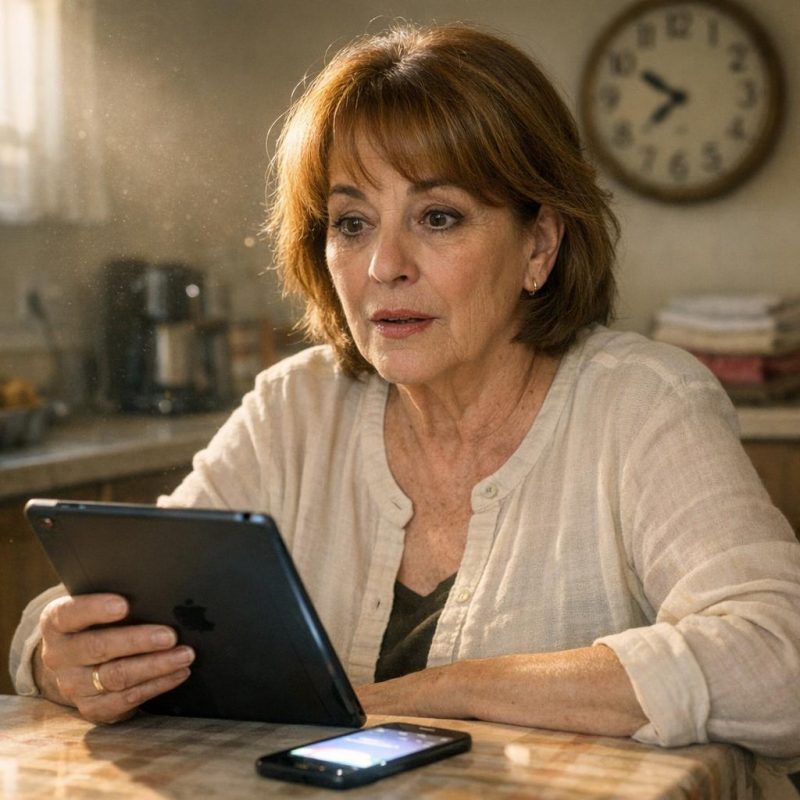 Image by RM AI
The Sunday Call
The phone rang that Sunday afternoon while I was folding towels into perfect thirds, the way I always do. I glanced at the caller ID and felt that little flutter mothers get when their children call unexpectedly. "Derek?" I answered, balancing the phone between my ear and shoulder. There was that pause—the one that told me this wasn't just a check-in call. "Hey, Mom," he said, his voice carrying that particular tone I've known since he was seven and broke my favorite ceramic bird. "How are you doing?" We chatted about nothing for a few minutes—the weather, his job, my coworker's retirement party—until he finally cleared his throat. "So, Mom, I was wondering..." Another pause. "Tessa and I are in a bit of a situation with our apartment. We need a place to stay just for a little while." I didn't even let him finish his sentence. "Yes," I said immediately, surprising myself with how desperately I wanted to fill this quiet house with something other than the sound of the kitchen clock. "When do you want to come?" The relief in his voice was palpable. "Really? You don't even know how long we might need to stay." I laughed softly. "Derek, I'm your mother. That's what mothers do." What I didn't say was how much I wanted him close again, how the emptiness had become its own kind of companion these past three years. We made arrangements for them to arrive that week, and after we hung up, I stood in the guest room doorway, staring at the perfectly made bed that hadn't been slept in for months. I had no idea then that saying yes would bring more than just my son back into my life—it would bring strange noises in the night that would have me questioning my own sanity.
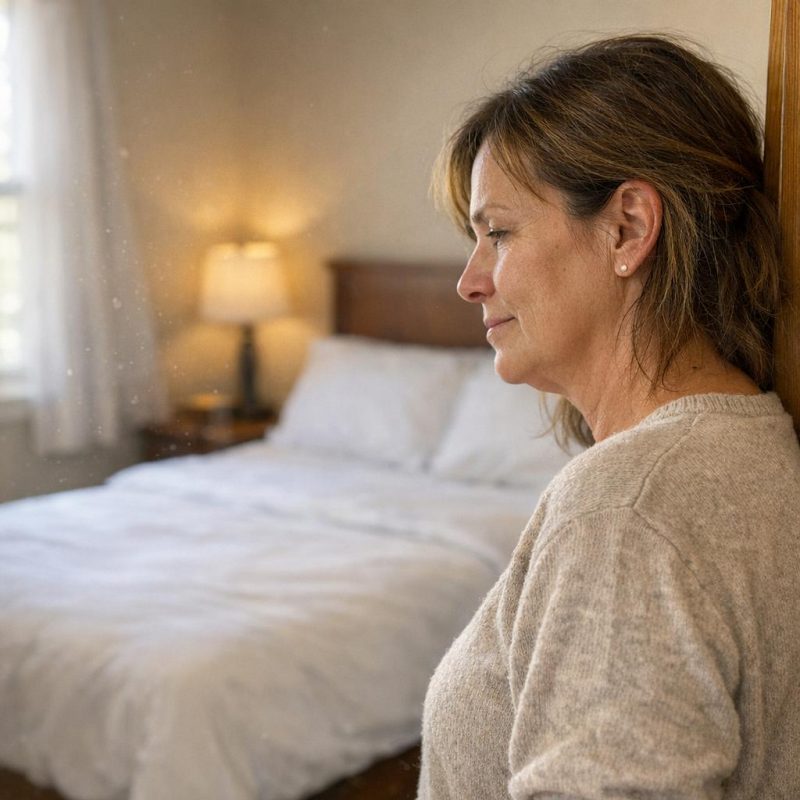 Image by RM AI
The Arrival
Derek arrived on Wednesday afternoon, his shoulders hunched under the weight of two overstuffed duffel bags and what looked like the stress of the entire world. I hadn't seen those dark circles under his eyes since his college finals week. He gave me a quick one-armed hug before setting his bags down in the entryway. "Thanks for this, Mom," he mumbled, his voice carrying that mix of gratitude and embarrassment that only adult children can perfect. But it was the young woman trailing behind him who caught my attention. Tessa stepped into my house like she was entering a museum—cautious, respectful, and clearly determined to make a good impression. "Mrs. Harlan, thank you so much for letting us stay," she said, then repeated her thanks twice more before I could even close the front door behind her. She immediately offered to help me unload the groceries I'd picked up that morning, calling me "ma'am" without a hint of irony. When I made a silly joke about buying enough ice cream to survive the apocalypse, she laughed like I was the next Betty White. As I showed them to the guest room, I caught Derek watching her—the way his eyes softened around the edges, how his hand instinctively reached for hers when she looked nervous. It was the kind of look that made my heart twist with both joy and a pang of something like envy. I hadn't been looked at that way in three years. That night, as I lay in bed listening to their muffled voices and occasional laughter through the wall, I thought maybe—just maybe—this arrangement might heal more than just their housing situation. Little did I know that within a week, those comforting sounds would be replaced by something far more unsettling.
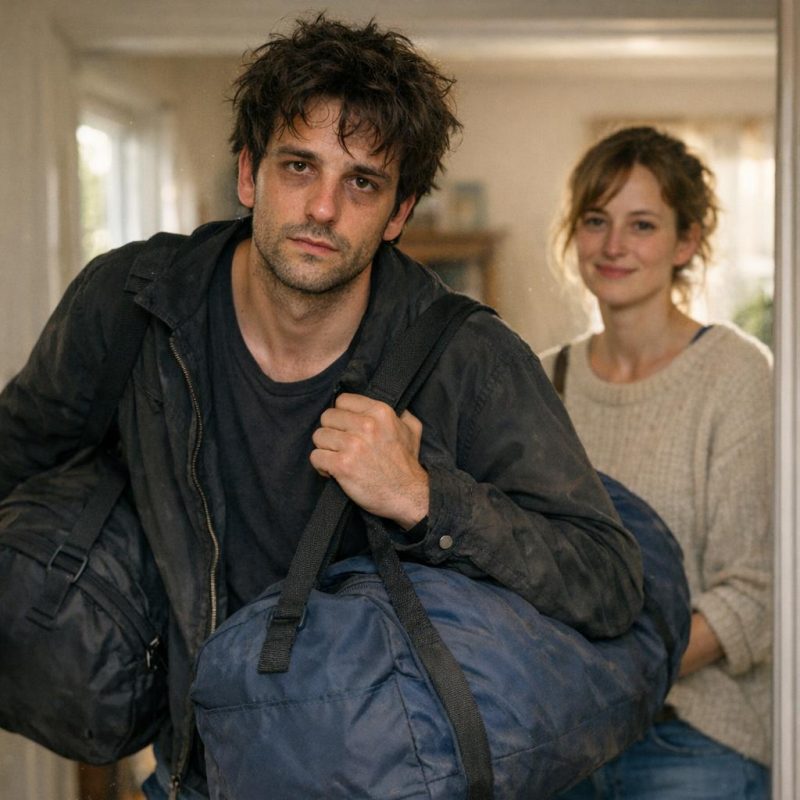 Image by RM AI
Perfect Guests
The first week with Derek and Tessa felt like I'd stumbled into some kind of Hallmark movie where adult children actually pick up after themselves. Every morning, I'd come downstairs to find the kitchen spotless—not a crumb on the counter or a mug in the sink. Tessa insisted on helping with dinner prep, chopping vegetables with the precision of someone who'd watched too many cooking shows. "Mrs. Harlan, this chicken casserole is amazing," she'd gush, taking seconds even though I noticed she barely touched the first serving. Derek, my son who once left wet towels on his bedroom floor for days, now took the trash out before I even mentioned it needed going. He fixed the squeaky hinge on the bathroom door without being asked and replaced the porch light that had been burned out for months. At night, they'd insist I choose what to watch on TV, then laugh at all the right moments during my favorite game shows. It was almost too perfect, this little domestic arrangement we'd fallen into. Like they were auditioning for "World's Best Houseguests" and I was the sole judge. I kept waiting for the mask to slip, for someone to leave dishes in the sink or complain about my early-bird tendencies. But as the first week melted into the second, everything remained picture-perfect—until the night I woke up at 1:30 AM to strange sounds coming from my kitchen.
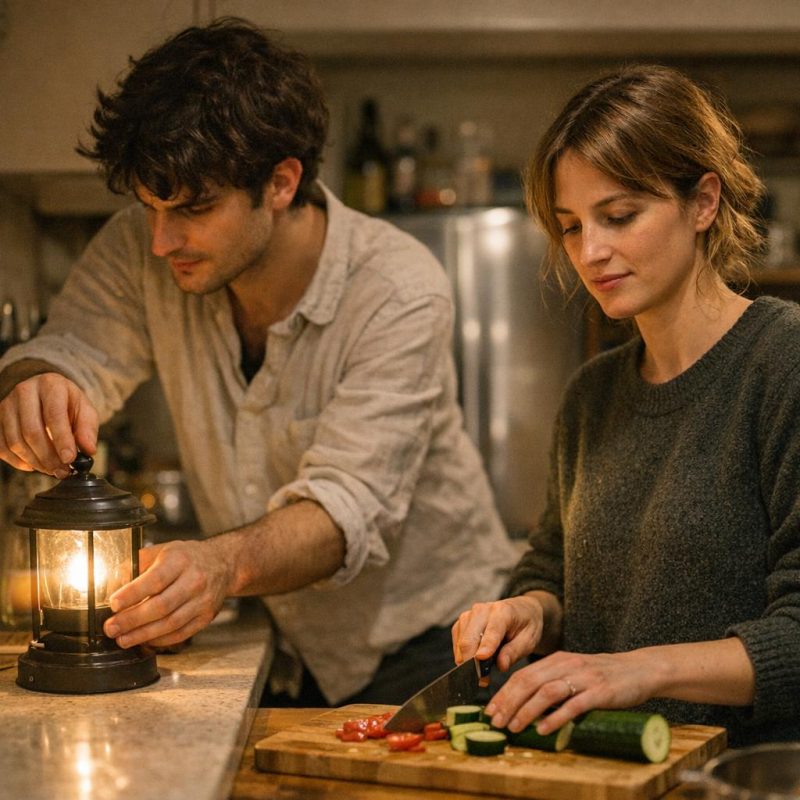 Image by RM AI
The First Sound
I woke with a start at 1:30 AM, my throat dry as sandpaper. The digital clock's red numbers glowed accusingly in the darkness as I swung my legs over the side of the bed. That's when I heard it—the unmistakable sound of a cabinet door opening downstairs, followed by a soft thump, like something being set on the counter. I froze, one hand clutching the edge of my nightstand. The house had been so predictably quiet for three years that any unexpected noise felt like an intrusion. I held my breath, straining to hear more. The old floorboards creaked their familiar song, the house settled with a gentle sigh, and then... nothing. Just silence thick enough to cut with a knife. My rational mind said it was just Derek grabbing a midnight snack—what else could it be? But something about the careful quietness of the sound made the hair on my arms stand up. It wasn't the casual rummaging of someone who felt at home; it was the deliberate movement of someone trying not to be heard. I sat there for what felt like forever, debating whether to go downstairs or crawl back under my covers and pretend I hadn't heard anything. Eventually, I slid back into bed, pulling the quilt up to my chin like a child afraid of monsters. In the morning, I'd casually ask Derek if he'd been up for a snack. No need to seem paranoid or jumpy—that's not the kind of mother-in-law impression I wanted to make. But as I drifted back to sleep, a nagging thought kept circling: if it was just an innocent midnight snack run, why be so quiet about it?
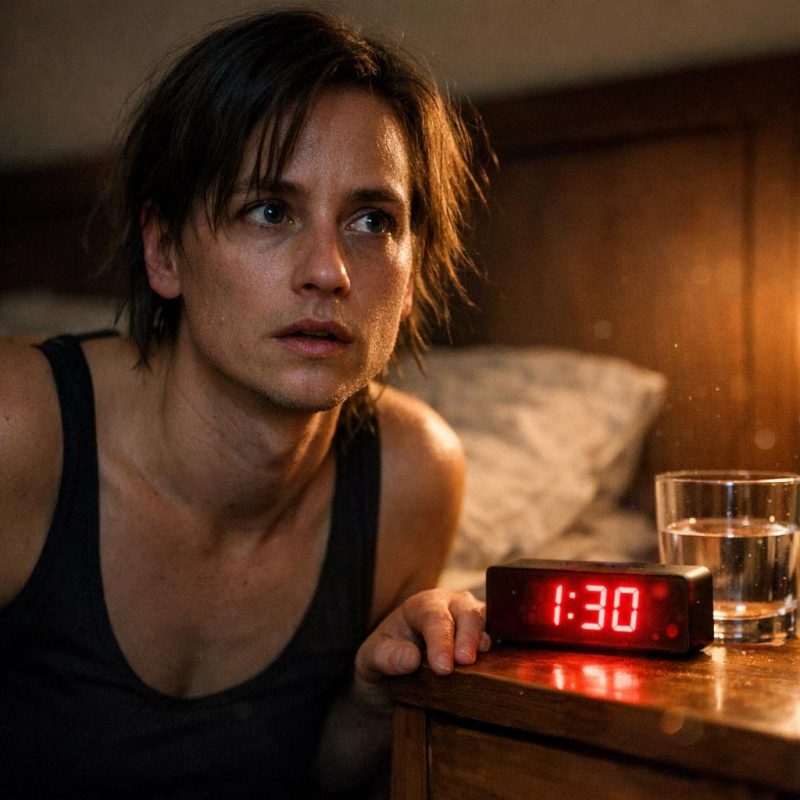 Image by RM AI
Morning Questions
The next morning, I stirred my coffee longer than necessary, watching the cream swirl into tiny galaxies while I gathered my courage. "Were you up last night?" I asked, trying to sound casual. Derek looked up from his cereal bowl, milk dripping from his spoon mid-air. "Nope," he said, blinking those same brown eyes that used to tell me about monsters under his bed. "Slept like a rock." Tessa's head snapped up too quickly, her ponytail swinging. "Not me," she said, voice a touch too high. "I didn't even wake up once." I nodded and forced a little laugh that sounded hollow even to my own ears. "Must've been the house settling then. These old places, you know how they talk." But something in their exchange—the way they didn't look at each other, how Tessa's fingers tightened around her mug—made my stomach knot like a fist. I busied myself with the breakfast dishes, scrubbing a perfectly clean plate while I felt Tessa's eyes on my back. When I turned around, she was watching me with this strange, calculating expression that vanished the moment our eyes met, replaced by that sunshine smile that suddenly seemed rehearsed. "Can I help with those, Mrs. Harlan?" she asked, already standing. I shook my head and wondered when exactly my quiet, predictable life had started to feel like a puzzle with missing pieces.
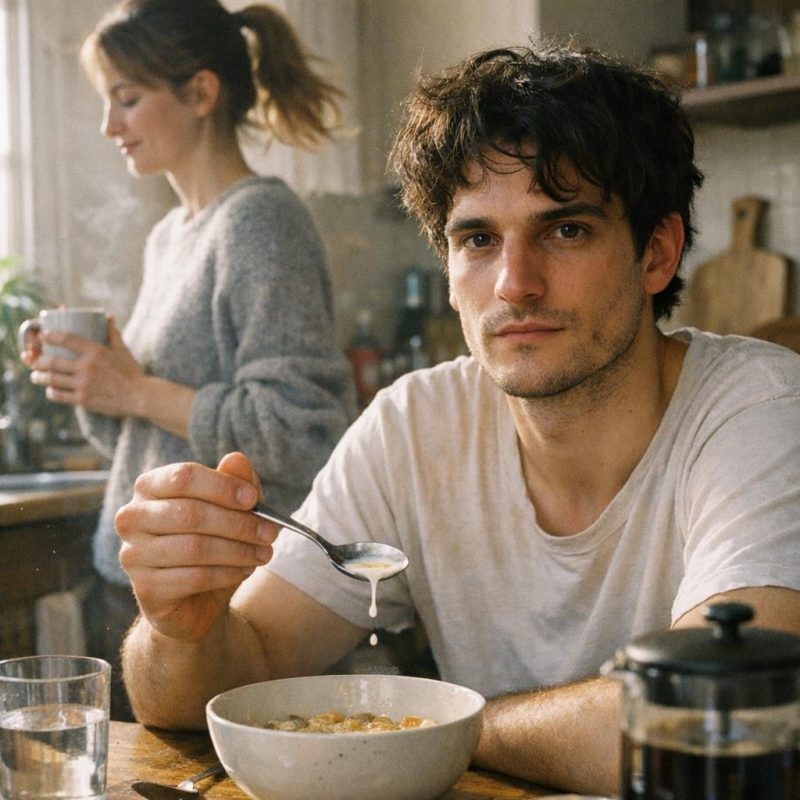 Image by RM AI
Night Patterns
Over the next week, those midnight sounds became a pattern as reliable as my morning coffee. I'd wake up around 2 AM, heart pounding, to what sounded like a chair being dragged across my kitchen floor, or a low mechanical hum that didn't match any appliance I owned. I started sleeping with my bedroom door cracked open, which only made things worse—suddenly I could hear everything: the furnace clicking on with its asthmatic wheeze, the refrigerator's familiar sigh, even the wind tapping at my windows like an impatient visitor. One night, I distinctly heard a muffled voice downstairs, followed immediately by a sharp, urgent whisper: "Shh!" That sent me bolt upright, clutching my quilt like armor. Each time I gathered enough courage to investigate, padding down the stairs in my slippers with my phone flashlight trembling in my hand, I'd find nothing. The kitchen would be spotless—no dirty dishes, no open cabinets, nothing out of place except my fraying nerves. In the morning, Derek and Tessa would be at the breakfast table, fresh-faced and cheerful, as if they'd slept soundly through the night. I'd catch myself studying their faces for signs of fatigue or deception, then feel guilty for suspecting my own son of... what exactly? I couldn't even name what I was afraid of. Was grief finally catching up with me, turning ordinary house sounds into midnight monsters? Or was something happening in my kitchen that nobody wanted me to know about?
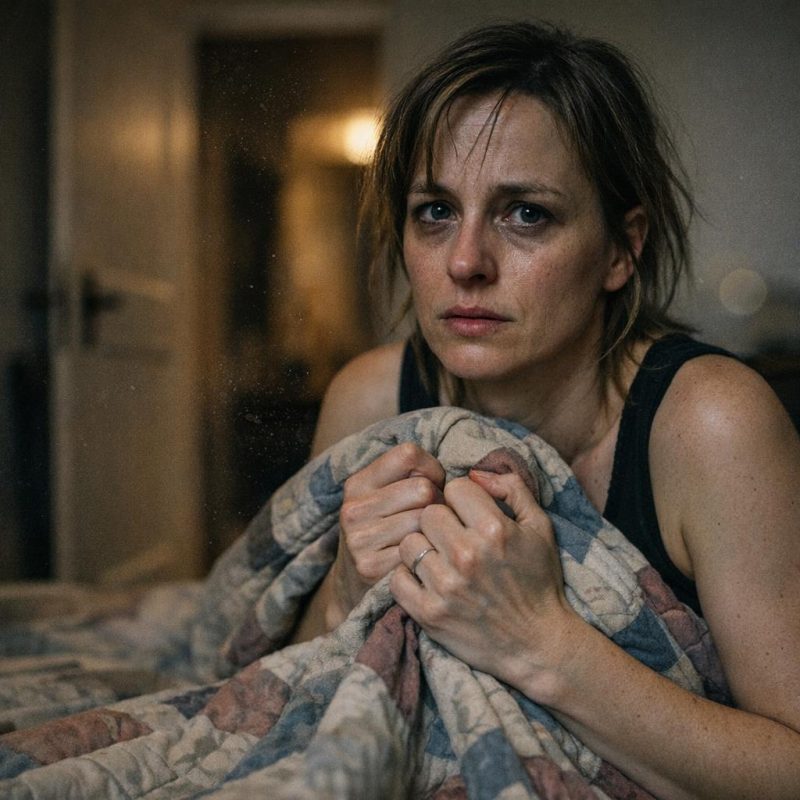 Image by RM AI
Sleepless Vigilance
I've become a midnight detective in my own home, sleeping with my bedroom door cracked open like some paranoid neighborhood watch captain. It's backfiring spectacularly. Now I hear EVERYTHING—the furnace kicking on with what sounds like an old man's cough, the refrigerator's dramatic sighs that remind me of my sister during family gatherings, even the wind tapping at my window like it's trying to tell me secrets. I lie awake cataloging each sound, wondering which ones are normal house noises and which might be... something else. During daylight hours, I find myself studying Derek and Tessa like they're suspects on one of those true crime shows I binge-watch. Does Tessa's smile seem a little too rehearsed when she offers to water my plants? Is Derek checking his phone more often than usual? Yet they continue to be perfect houseguests—Tessa even organized my spice rack alphabetically, something I've been meaning to do for years. I'm starting to wonder if grief has finally pushed me over some invisible edge. Maybe loneliness has a sound, and that's what I'm hearing at night. Or maybe—and this thought keeps me up more than any strange noise—maybe I'm just so desperate for something to happen in my quiet life that I'm inventing mysteries where there are none. Last night, I could have sworn I heard whispering downstairs, but when I checked my phone, it was 3:17 AM. What could they possibly be doing at that hour? And why do I feel like I'm the outsider in my own home?
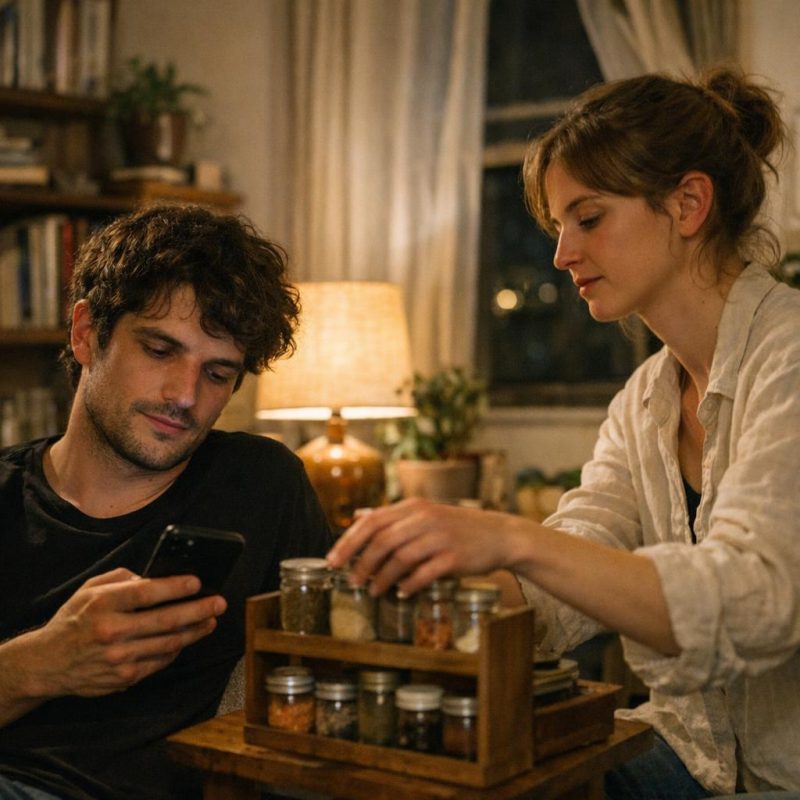 Image by RM AI
The Neighbor's Text
I was just drifting back to sleep when my phone buzzed on the nightstand, the screen lighting up my darkened bedroom like a miniature lighthouse. 2:07 AM. Who on earth would text at this hour? I fumbled for my reading glasses and squinted at the notification. It was from Sylvia next door—a widow like me who walks her yappy little Pomeranian at the most ungodly hours. "Marcia, are you okay? I just saw lights flickering in your kitchen. Like... a TV light. Someone moving around." My mouth went desert-dry as I read her words twice, three times. My heart wasn't just racing; it was running a full marathon in my chest. With trembling fingers, I typed back, "Probably Derek. Thanks." But even as I sent it, I knew it was a lie. Derek had been snoring when I passed his room earlier. I set the phone down and stared into the darkness, my mind spinning like those buffering circles on Netflix when your internet's acting up. Someone else had seen it. This wasn't grief or loneliness or my imagination playing tricks. Something was happening in my kitchen, and now I had proof from an outside observer. I eased my legs over the side of the bed, my knees cracking in protest. The hardwood floor felt ice-cold against my bare feet as I stood, gathering what little courage I had left. If Sylvia could see movement from her house, it meant whatever—or whoever—was down there had turned on enough light to be visible through the curtains. As I crept toward my bedroom door, I realized I was about to face whatever had been haunting my nights, and I wasn't sure I was ready for what I might find.
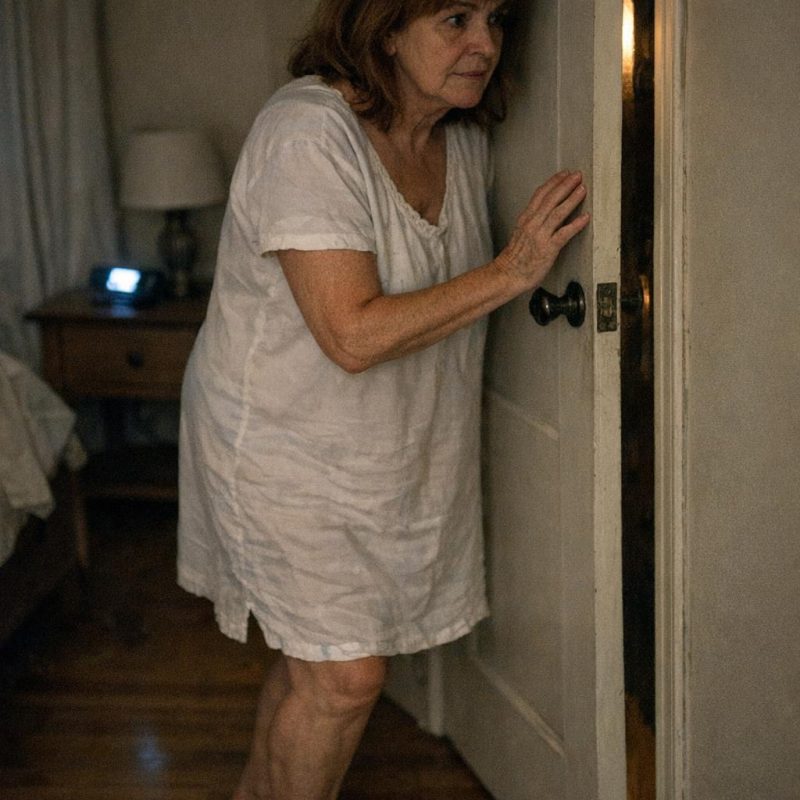 Image by RM AI
The Pantry Glow
I eased out of bed, my heart hammering so hard I could feel it in my throat. The stairs creaked under my weight as I crept down, one careful step at a time, gripping the banister like it was a lifeline. When I reached the bottom, I paused, listening. Nothing. The living room was dark, the kitchen darker still. No movement, no sound except my own shallow breathing. I was about to turn back, to convince myself that Sylvia had seen headlights from the street or maybe the reflection of the moon on my windows, when something caught my eye—a faint bluish glow seeping out from under the pantry door. It was barely there, like someone had left a phone screen on inside. My mouth went dry. In three years of living alone, I'd never once left anything in that pantry that could produce light. I stood frozen for what felt like minutes, staring at that thin line of illumination. Then, gathering what little courage I had left, I took three steps forward and reached for the doorknob. The instant my fingers touched the cool metal, the glow vanished. Just... gone. When I pulled the door open, there was nothing but canned soup and cereal boxes and my apron hanging on its hook. I ran my hand along the shelves, behind the flour canisters, even checked the light bulb to see if it was warm. Nothing. I closed the door and leaned against it, my nightgown damp with sweat. Either I was losing my mind, or someone in my house was playing a game I didn't understand—and I wasn't sure which possibility terrified me more.
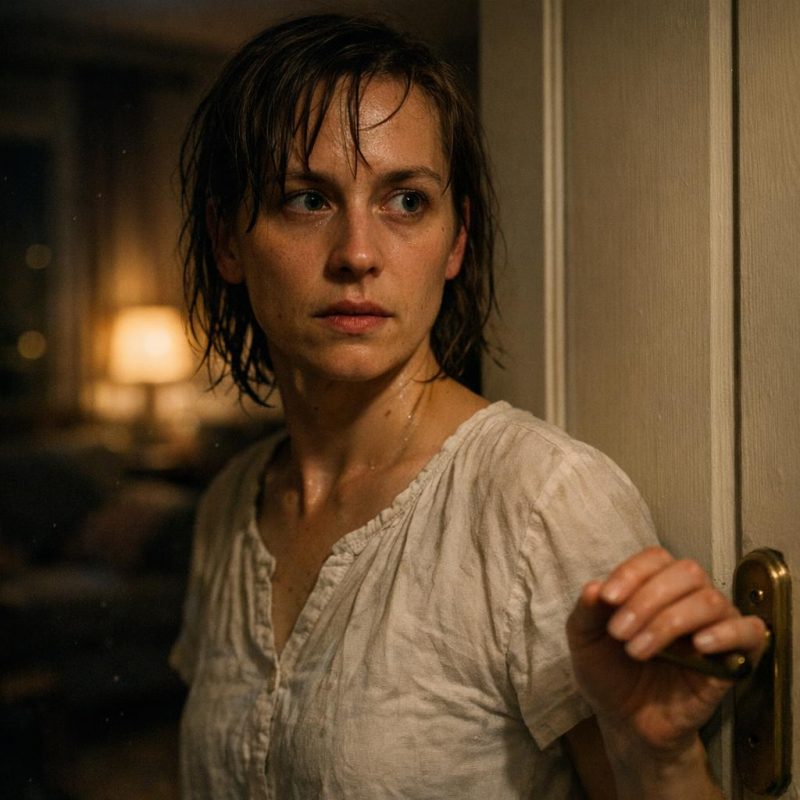 Image by RM AI
Morning Confrontation
The next morning, I poured coffee into three mugs, my hands still a little shaky from the night before. I waited until both Derek and Tessa were seated at the table before I casually dropped my bombshell. "Sylvia texted me last night," I said, stirring cream into my coffee to avoid making eye contact. "She saw lights in the kitchen at two in the morning." I glanced up just in time to catch their reactions. Derek's forehead creased with what looked like genuine confusion, while Tessa's cheeks flushed a delicate pink. She suddenly became fascinated with her coffee mug, staring into it like she was reading tea leaves. "That's... weird," she mumbled, her voice barely audible. Derek shrugged and suggested that maybe Sylvia had seen car headlights reflecting through the windows. That might have made sense if Sylvia hadn't specifically mentioned movement. I nodded anyway, not pushing too hard. The truth is, part of me didn't want an answer. When you live alone too long, your mind starts playing tricks. Grief can make you see shadows where there are none. I'd watched enough Dateline episodes to know that the simplest explanation is usually the right one. But as I watched Tessa's fingers nervously tap against her mug, I couldn't shake the feeling that something wasn't adding up. What could possibly be happening in my kitchen at 2 AM that my son and his girlfriend didn't want me to know about?
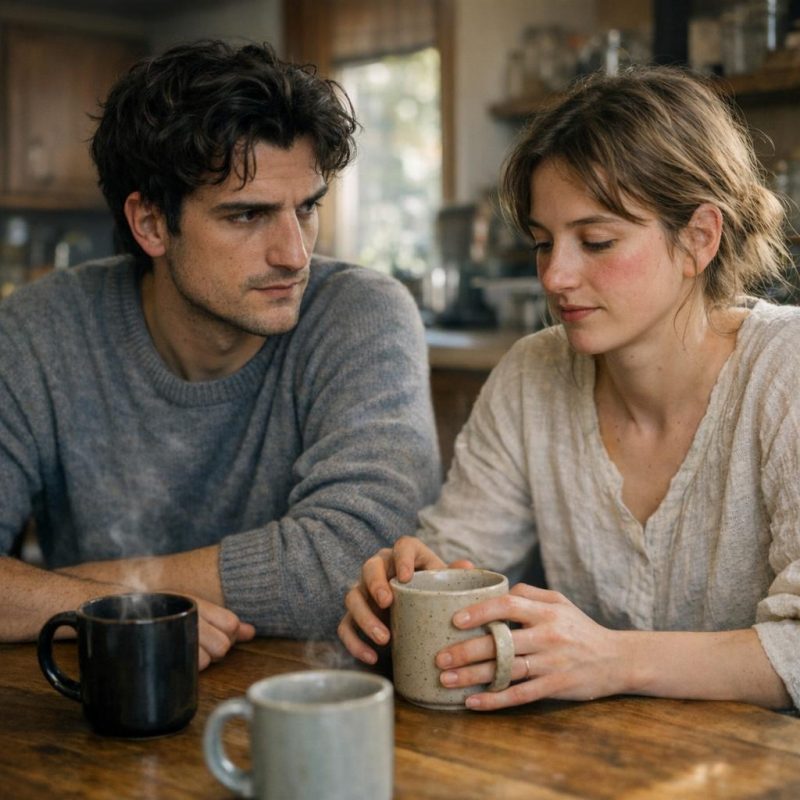 Image by RM AI
Small Discrepancies
I've always been a creature of habit. My junk drawer has been organized the same way since 2011, and I can find the measuring spoons with my eyes closed. That's why the little changes around my kitchen started to feel like paper cuts—small but impossible to ignore. First, it was my roll of painter's tape. I'd bought it last summer to mark off the trim when I repainted the guest bathroom, and I knew—KNEW—there was at least three-quarters of it left. Now it was half gone. Then the measuring cups, which had hung on the third hook by the stove since Derek was in elementary school, mysteriously migrated to the hook by the refrigerator. But what really sent a chill down my spine was finding my grandmother's big ceramic mixing bowl—the one I only use for Christmas cookie dough—freshly washed and sitting in the dish rack. I hadn't touched that bowl in months. I stood there, dish towel clutched in my hand, staring at it like it was evidence in a crime scene. When you live alone, you notice these things. Your home becomes an extension of yourself, and any disruption feels like an intrusion. I wanted to ask Derek and Tessa about it, but what would I say? 'Hey, did you move my measuring cups three inches to the left?' I'd sound like a crazy person. But as I put the mixing bowl back on its shelf, I couldn't shake the feeling that these weren't random changes. Someone was using my kitchen for something they didn't want me to know about, and whatever it was, they were being very careful to cover their tracks—just not careful enough.
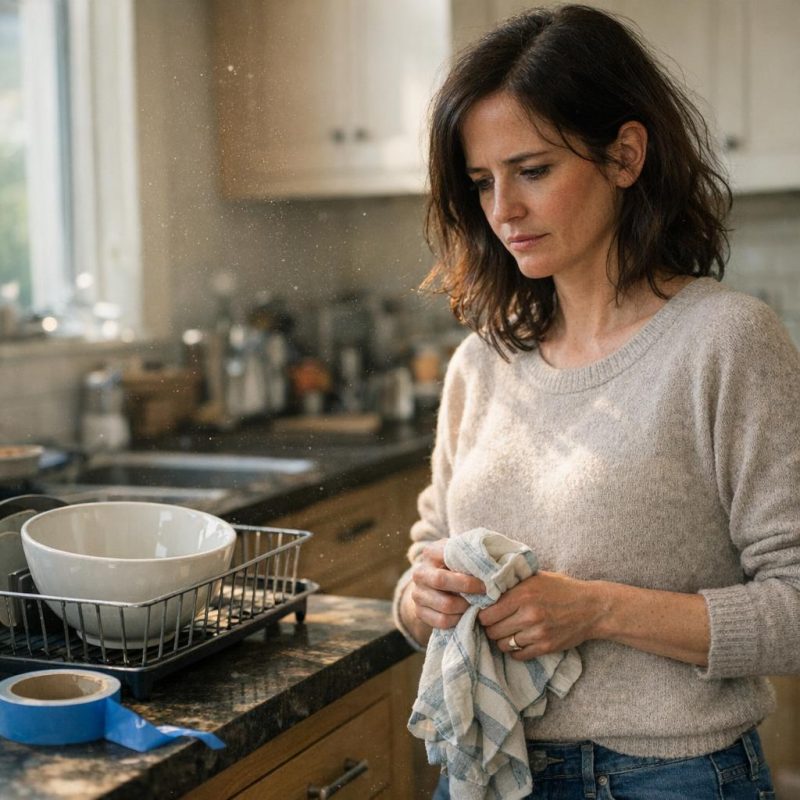 Image by RM AI
The Red Smear
I was reaching for a dish towel in the laundry room when I saw it—a tiny smear of dark red on the inside of the sink. Not rust, not tomato sauce, but something that looked disturbingly like blood. It was small, barely the size of a thumbprint, but unmistakable against the white porcelain. Someone had tried to wipe it away, but missed a spot. My stomach dropped as I leaned closer, my mind racing through terrible possibilities. Had someone been hurt? Was it something worse? I stood there frozen, staring at that crimson streak until my eyes burned, unable to look away. All day, the image haunted me. I rehearsed casual ways to bring it up—"Did anyone cut themselves recently?"—but each attempt died in my throat. When evening came, Tessa floated into the living room where I was folding laundry, her smile warm and genuine. "Can I help with those towels, Mrs. Harlan?" she asked, already reaching for the basket. Later, she excitedly showed me a coupon she'd found for my favorite tea. "It's buy one, get one free," she said, eyes bright with the simple pleasure of doing something nice. How could I look at this sweet young woman and ask if she'd left blood in my sink? What kind of monster would that make me? So I said nothing, tucked the coupon into my purse, and tried to ignore the voice in my head that whispered: if there's nothing to hide, why are they hiding it?
 Image by RM AI
The Decision
I decided enough was enough. After two weeks of jumping at every creak and shadow, I needed answers more than I needed sleep. That night, I went through my usual bedtime routine—face cream, teeth brushed, lamp off at ten—but instead of closing my eyes, I sat up against my headboard, fully dressed in my robe and slippers. From down the hall, I could hear Derek's muffled laughter as he watched something on his phone, the occasional snort that reminded me of when he was a teenager. Eventually, his room went quiet. The digital clock on my nightstand ticked past eleven, then midnight. My eyelids grew heavy, but I pinched my thigh each time I felt myself drifting. At 1:30, the house settled into that deep silence that feels almost alive. I waited, counting my breaths, listening for anything out of place. At precisely 1:48 AM, I heard it again: the soft thud of something being set on the counter, then a tiny click-click-click like a lighter or a switch. My heart hammered against my ribs as I slid out of bed, careful not to let the springs creak. This time, I wouldn't just peek and retreat. This time, I'd face whatever—or whoever—was haunting my kitchen. As I crept down the hallway toward the stairs, a faint bluish light spilled up from below, casting eerie shadows on the wall. Whatever I was about to discover, I knew my quiet, predictable life would never be the same again.
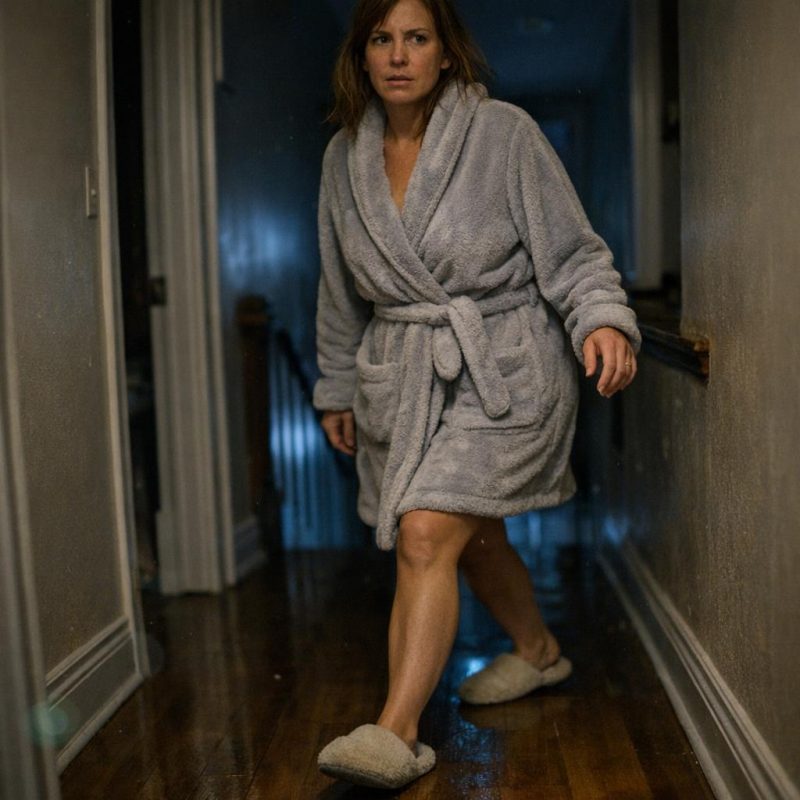 Image by RM AI
The Midnight Kitchen
I slid out of bed at 1:48 AM, my heart pounding like a drum solo as I grabbed my robe and stepped into the hallway. The familiar weight of dread and curiosity pulled me forward. I'd done this dance before—waking to strange sounds, investigating, finding nothing—but tonight felt different. Tonight, I'd catch whatever was happening in my kitchen. I carefully navigated the stairs, wincing as the third step creaked its betrayal. That step had tattled on Derek when he was sixteen, sneaking in past curfew, and now it threatened to announce my presence too. I paused, holding my breath, but the soft click-click-click continued below. When I reached the bottom, a faint bluish light spilled from the kitchen doorway, flickering like a television with the sound muted. The air felt colder than it should, raising goosebumps along my arms. I pressed my back against the wall, gathering courage. Three years of widowhood had taught me to face most fears alone, but this one—this strange midnight ritual happening under my roof—made my chest tighten with something beyond simple fear. I inched toward the kitchen, the flickering light casting strange shadows across the hallway floor. Whatever I was about to discover, I knew it would change everything. I took a deep breath, rounded the corner, and froze at what I saw.
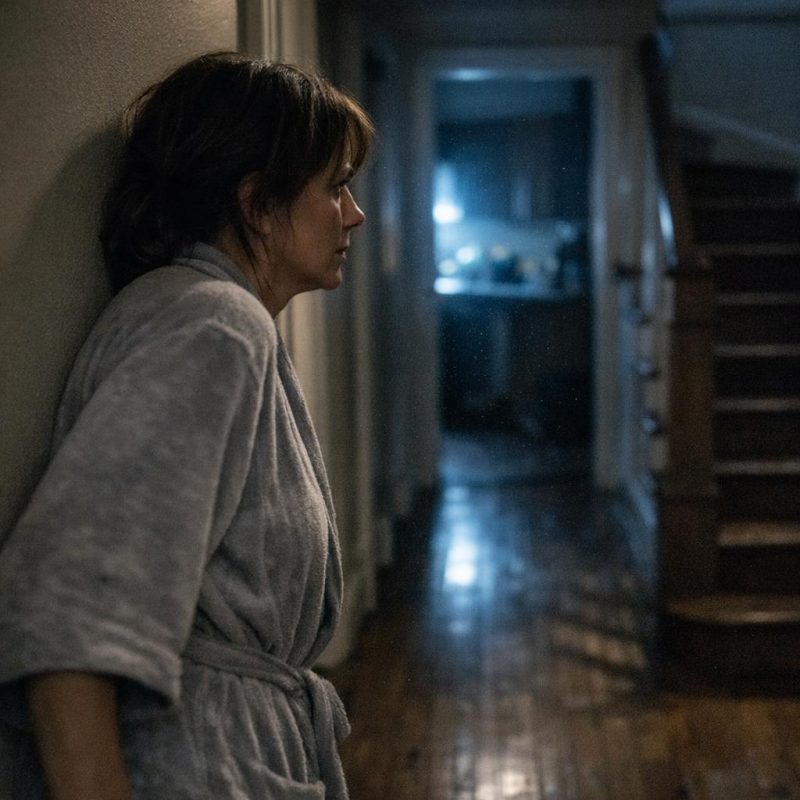 Image by RM AI
Blood and Fear
I rounded the corner and stopped so abruptly my breath caught in my throat. There, in my kitchen, was Tessa. But not the sweet, ponytailed young woman who'd been helping with dishes and finding coupons for my tea. This Tessa was standing in the middle of my tile floor in bare feet, her hair pulled up messily, her face ghostly pale in the blue light—and she was covered in blood. Not a little smear like I'd found in the sink. This was horror-movie blood—on her hands, her sleeves, splattered across her shirt and streaked down her cheek like war paint. For one horrifying second, I couldn't move, couldn't speak, couldn't even scream. My brain tried desperately to fit the image into something logical and failed completely. The room seemed to tilt sideways as questions flooded my mind: Was she hurt? Had she hurt someone else? Where was Derek? My fingers gripped the doorframe to keep from collapsing as Tessa slowly turned toward me, her eyes widening when she saw me standing there. "Mrs. Harlan—Marcia—I—" The words tumbled out of her mouth in a panicked rush, but all I could focus on was the dark liquid dripping from her fingertips onto my clean kitchen floor. I'd lived through my husband's death, through grief that felt like drowning, through countless nights of crushing loneliness—but nothing had prepared me for finding my son's girlfriend blood-soaked in my kitchen at two in the morning.
 Image by RM AI
The Revelation
I grabbed the edge of the counter to steady myself, my knees suddenly weak. 'Tessa,' I whispered, barely recognizing my own voice. 'What... what is that?' She looked down at herself like she'd forgotten what she was wearing, then let out a sound that was half laugh, half sob. 'It's not real,' she blurted out, holding up her sticky red hands. 'It's not real blood. Please, please don't call anyone. I can explain.' My eyes darted to the counter, expecting to find something terrible. Instead, I saw the strangest collection of items: my cookie sheet with a puddle of dark red liquid, a bottle of corn syrup, cocoa powder, a cheap makeup sponge, and a roll of paper towels. Most surprising of all was Derek's phone, propped on a little tripod and facing the kitchen like it had been recording. The pieces weren't fitting together in my mind. Why would this sweet young woman be covered in fake blood in my kitchen at 2 AM? Why was she filming it? And where was my son? I looked back at Tessa, who was now trembling slightly, her eyes pleading with me to understand something I couldn't yet grasp. Whatever explanation she had, it better be good, because right now it looked like I'd invited a horror movie into my home.
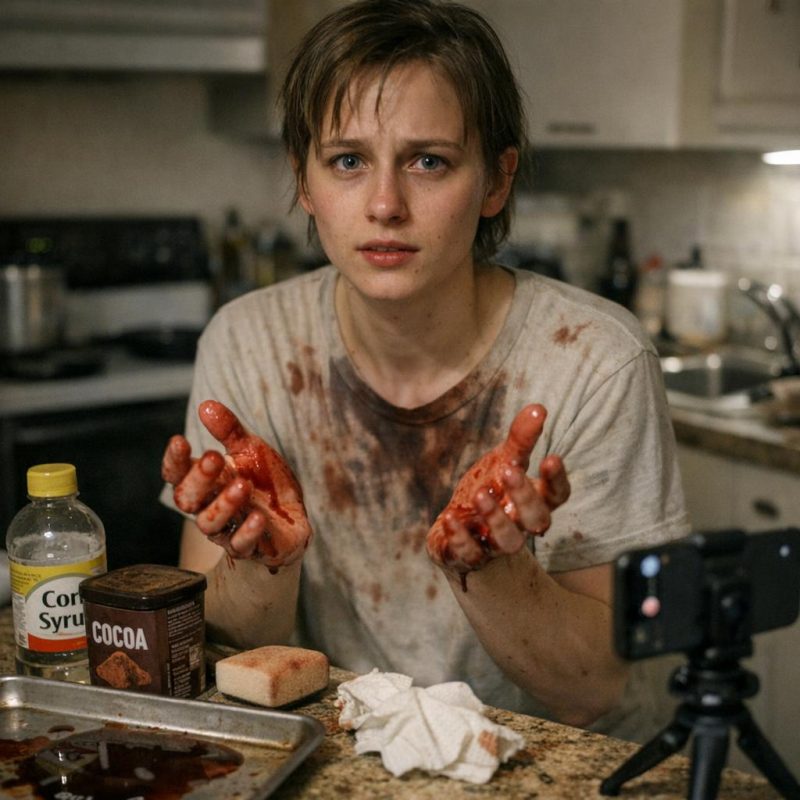 Image by RM AI
The Script
Beside Derek's phone on the tripod was a stack of papers, stapled at the corner. A script. I picked it up with trembling hands, still trying to process the fake blood scene playing out in my kitchen. 'I found it,' Tessa explained, her voice quivering. 'I found Derek's script in his backpack weeks ago. He wrote a short film. He didn't tell you. He didn't tell me either at first because he's embarrassed.' She wiped at her sticky cheek, smearing more fake blood. 'He wants to be a filmmaker, and he thinks everyone will laugh.' I flipped through the pages, scanning the words. 'It's about a woman alone in a house,' Tessa continued, gesturing helplessly at my kitchen. 'A widow, actually. And she starts hearing noises. And then there's this scene where she goes downstairs and finds... this. This exact thing.' The realization hit me like a wave – all those nights of strange sounds, the mysterious glow, the moved items – it wasn't something sinister. It was Tessa, trying to film a scene from my son's secret screenplay. 'I thought if I could film it, just this one scene, I could show Derek I believe in him,' she said, her eyes pleading for understanding. 'I could surprise him.' I stared at the first page of the script, where Derek had written in his familiar handwriting: 'THE KITCHEN LIGHT' and underneath, a dedication that made my heart catch: 'For Mom, who taught me to notice everything.'
 Image by RM AI
The Confession
Tessa's words tumbled out like a confession at church. 'I've only been coming down when I thought you were asleep,' she explained, her voice small and shaky. 'That light Sylvia saw? I hid it in the pantry so I could see what I was doing without waking the whole house.' I leaned closer to the counter, sniffing at the 'blood' – it smelled faintly sweet, like chocolate and corn syrup. My racing heart began to slow, my clenched muscles unwinding one by one. Relief washed over me in waves, but right behind it came something else – a dull ache that settled in my chest. For weeks, I'd been jumping at shadows, afraid in my own home, all because my son had a dream he hadn't trusted me enough to share. I looked at Tessa, really looked at her, standing there covered in fake blood and real worry. She'd been sneaking around in the dark, not to hurt anyone, but to help Derek believe in himself. 'He thinks you'll laugh at him,' she whispered, confirming my fears. 'He's been writing scripts since high school but never shows anyone.' I picked up the pages again, running my fingers over Derek's handwriting – the same slightly crooked letters I used to see on school permission slips and birthday cards. All this time, I thought I was protecting myself from an intruder, when really, I was being kept out of something much more important – my own son's heart.
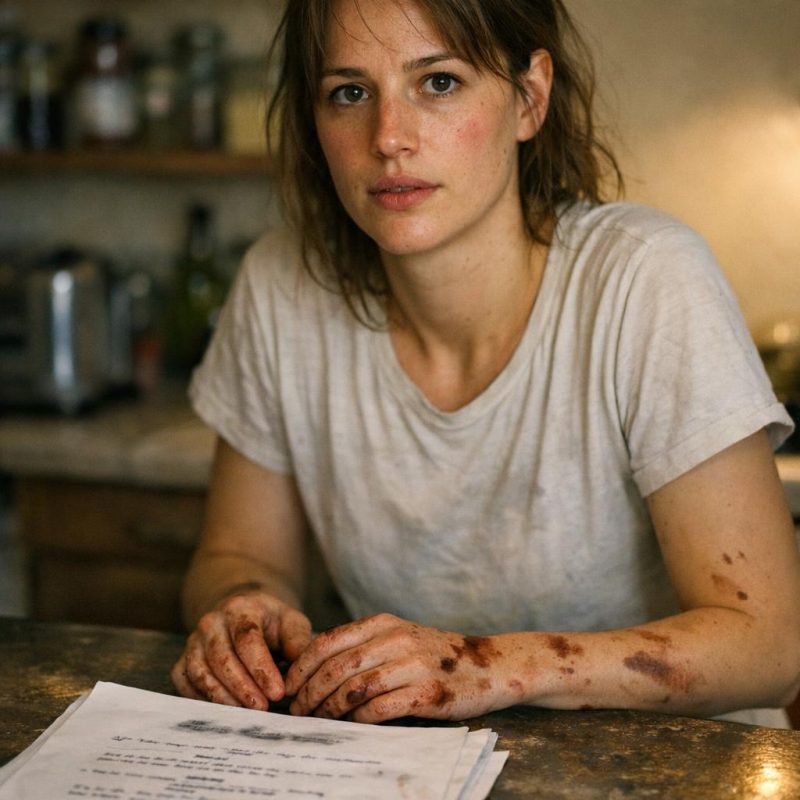 Image by RM AI
For Mom
I stare at the title page, my vision blurring as I read those words: 'For Mom, who taught me to notice everything.' My throat tightens with emotion I didn't expect. All this time, I'd been afraid of noises in the night, when my son had been crafting a story inspired by me. I set the pages down gently, like they're made of glass instead of paper. Looking up at Tessa, I see her differently now—not as an intruder in my kitchen, but as someone who loves my son enough to cover herself in fake blood at 2 AM just to help his dream take flight. 'He'll be so mad at me,' she whispers, her voice catching. 'He'll think I ruined it.' The kitchen feels suddenly warmer, more alive than it has in years. My house has been too quiet since Robert died—filled with ticking clocks and empty rooms and the hollow sound of my own footsteps. Maybe it's time to fill it with something else. 'You didn't ruin anything,' I tell her, surprising myself with how steady my voice sounds. 'You just scared the life out of me.' Tessa lets out a shaky laugh, smearing more red across her cheek as she wipes at it. That's when I make my decision—one that will change everything about our quiet little arrangement.
 Image by RM AI
The Proposal
I took a deep breath and felt something like purpose settle into my chest. The house had been too quiet for too long. Maybe it was time to fill it with something other than fear. "Okay," I said, surprising both of us with the steadiness in my voice. "If we're doing this, we're doing it properly. You're not sneaking around like a raccoon in my kitchen at two in the morning." Tessa blinked at me, confusion written across her face. "What?" I leaned forward, suddenly energized by this unexpected turn of events. "Tomorrow, we tell Derek I know. And then we enlist help. I have friends at church who love any excuse to be useful—Martha's been looking for a project since her knee surgery. Sylvia will be thrilled to have an explanation for what she saw instead of thinking I'm being robbed. My coworker's grandson does photography for the school yearbook." I gestured toward the garage. "And I have boxes of Christmas lights and old curtains we can use for sets." Tessa stared at me like I'd grown a second head, her mouth slightly open. "You'd... help?" she whispered, as if afraid speaking too loudly might change my mind. I nodded, feeling more certain with each passing second. "My son thinks I'll laugh at him," I said softly. "He doesn't realize I've been waiting for him to let me in." I pointed at the corn syrup mess on my counter. "And you—you owe me a deep clean of that floor." The look of pure relief that washed over Tessa's face made me wonder what other dreams I might have missed while I was busy listening for ghosts in the night.
 Image by RM AI
The Morning After
The next morning, I woke up early and set Derek's script on the kitchen table like a book club selection. Tessa joined me after her shower, hair still damp, wearing one of my old sweatshirts that made her look even younger. Her hands twisted together nervously as we waited. When Derek finally stumbled downstairs around nine, rubbing sleep from his eyes, he froze in the doorway like he'd seen a ghost. His gaze locked on the script, then darted between Tessa and me, his face draining of color. 'Mom... what's that?' he asked, his voice small, almost childlike. I patted the chair across from me. 'Sit,' I said, trying to keep my voice gentle. 'We need to talk about your kitchen scene. And then we need to talk about how we're going to make this movie of yours real—before my neighbors call the police on your leading lady again.' The emotions that crossed his face in that moment—shock, embarrassment, and then a fragile, tentative hope—made my heart swell. For years, I'd thought the silence in this house was the price of growing older, of letting go. I never imagined that breaking that silence would feel like coming home. As Derek slowly sank into the chair, I realized the real mystery wasn't who had been making strange noises in my kitchen—it was why I'd ever believed I had to face my fears alone, when the people I loved were right upstairs, waiting for someone to turn on the light.
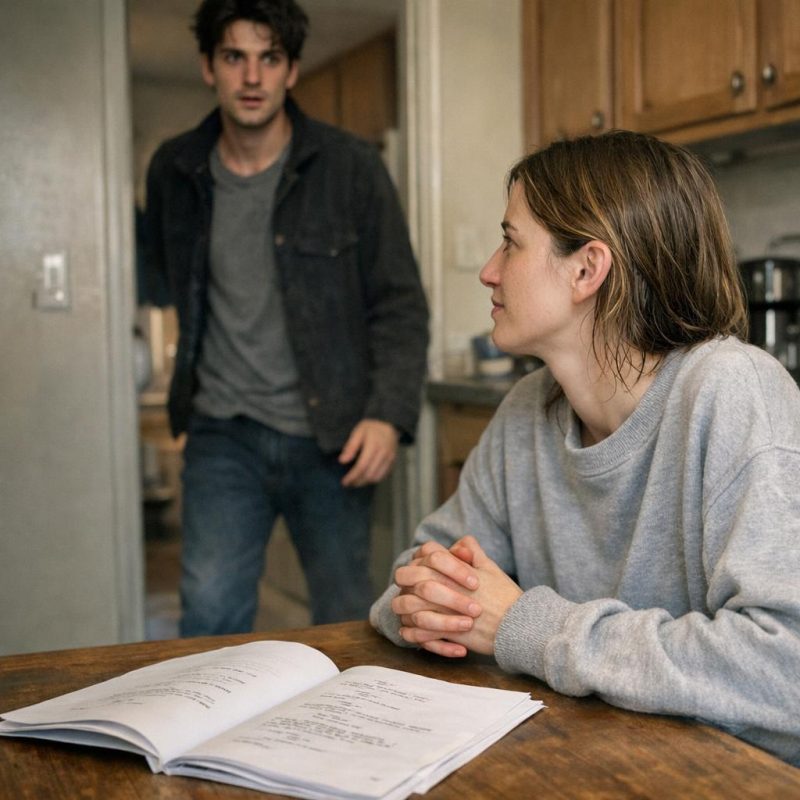 Image by RM AI
Derek's Dream
Over steaming mugs of coffee the next morning, Derek finally opened up. His hands trembled slightly as he pushed his scrambled eggs around his plate. 'I lost my job at the marketing firm last month,' he confessed, not meeting my eyes. 'That's the real reason we needed a place to stay.' I reached across the table and squeezed his hand, but he wasn't finished. 'The thing is, Mom, I've been writing scripts since college. That's what I really want to do.' As he spoke, his voice grew stronger, his eyes lighting up with a passion I hadn't seen since he was a little boy who'd narrate elaborate stories about the shapes he saw in his mashed potatoes. 'Remember when I used to make those potato mountain ranges with gravy rivers?' he asked, a small smile playing at his lips. I nodded, my throat tight with emotion. 'I'd forgotten how much you encouraged that,' he continued. 'You'd ask what happened next, even when Dad said I was being silly.' He explained how he'd been writing during lunch breaks, early mornings, whenever he could steal a moment. 'I was too scared to show anyone,' he admitted. 'Too scared of failing.' Tessa reached over and touched his shoulder. 'Show her the one about the lighthouse,' she urged gently. Derek hesitated, then pulled out his phone. As he scrolled through his files, I realized my quiet, practical son had been harboring an entire universe of stories all this time—and I'd never even suspected.
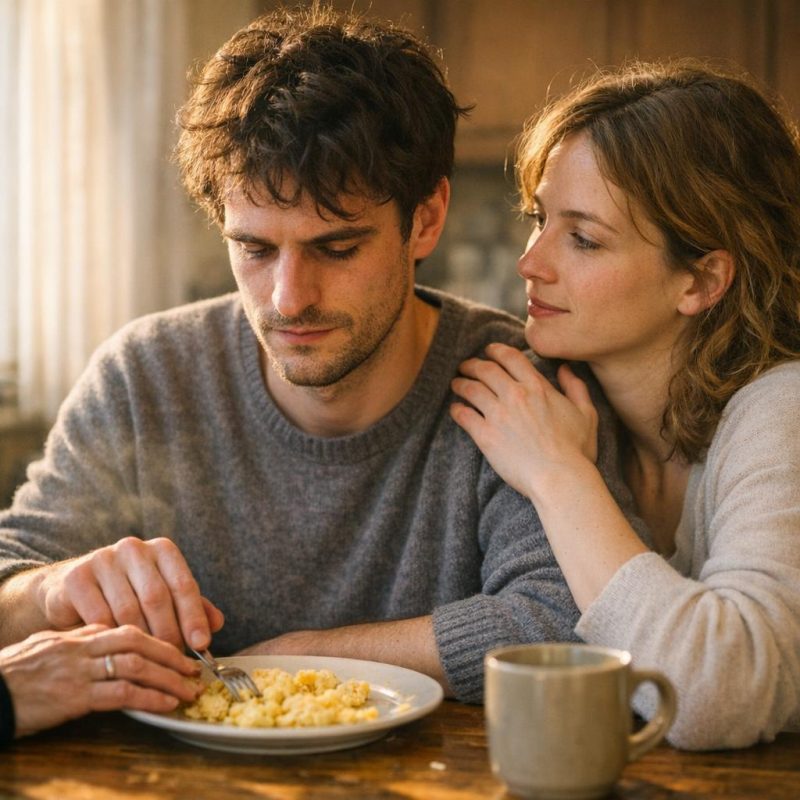 Image by RM AI
The Script Reading
That afternoon, we gathered in the living room—Derek, Tessa, and me—with fresh coffee and the plate of oatmeal cookies I'd stress-baked that morning. Derek's script lay between us on the coffee table like a confession. 'I'm not sure I can watch you read it,' he mumbled, but he stayed anyway, perched on the edge of the couch as Tessa and I turned the pages. The story—a psychological thriller about a widow who discovers her late husband had hidden something in their home—was surprisingly sophisticated. I found myself holding my breath during certain scenes, forgetting that my son had written them. What struck me most was how much of our real life Derek had woven into the fiction: the way the kitchen light flickered when the refrigerator kicked on, the specific creak of the third stair, even the little ritual I had of touching Robert's photo before bed each night. 'You noticed all this?' I asked, looking up at him over my reading glasses. He shrugged, but I could see the pride fighting with his nervousness. When we reached the final page, the room fell silent. Derek stared at his hands, waiting. 'It's good,' I finally said, my voice thick with emotion. 'It's really good, Derek.' The relief on his face made me realize how long he'd been carrying this dream alone, afraid of judgment—even from his own mother. What else had I missed while I was busy keeping my little house tidy and my grief contained?
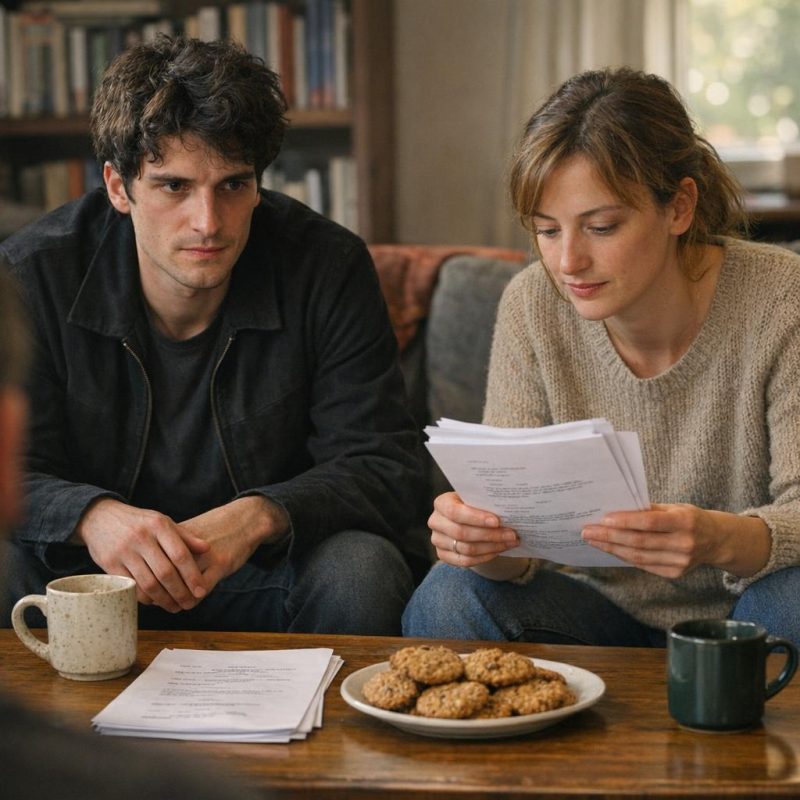 Image by RM AI
Recruiting Sylvia
The next morning, I invited Sylvia over for coffee, determined to explain the midnight kitchen mystery that had her texting me at 2 AM. When she arrived, her little Yorkie tucked under her arm like always, I sat her down at my kitchen table—the very spot where Tessa had been covered in fake blood just hours earlier. 'Remember that text you sent me about lights in my kitchen?' I asked, pouring her coffee into the good mugs I usually save for company. As Derek and Tessa joined us, we took turns explaining the whole ridiculous situation—the secret screenplay, the midnight filming sessions, the corn syrup blood. By the time we finished, Sylvia was laughing so hard tears streamed down her face, smudging the mascara she always applies too heavily. 'And here I thought you had a ghost—or worse, a burglar with a flashlight!' she wheezed, dabbing at her eyes with a napkin. Then, without missing a beat, she straightened up and declared, 'Well, count me in. I'll be whatever you need—extra, caterer, boom mic operator.' The words tumbled out with such enthusiasm that Derek looked up from his coffee in surprise. 'Really?' Sylvia nodded vigorously, already pulling out her phone. 'My nephew works at the community theater. He can probably borrow some equipment.' I watched as Derek's expression shifted from embarrassment to something I hadn't seen in years—that spark of cautious excitement he used to get before his baseball games in high school. It was the look of someone who suddenly realizes their private dream might actually have a chance, and I silently thanked Sylvia for giving my son something I couldn't: permission to believe in himself.
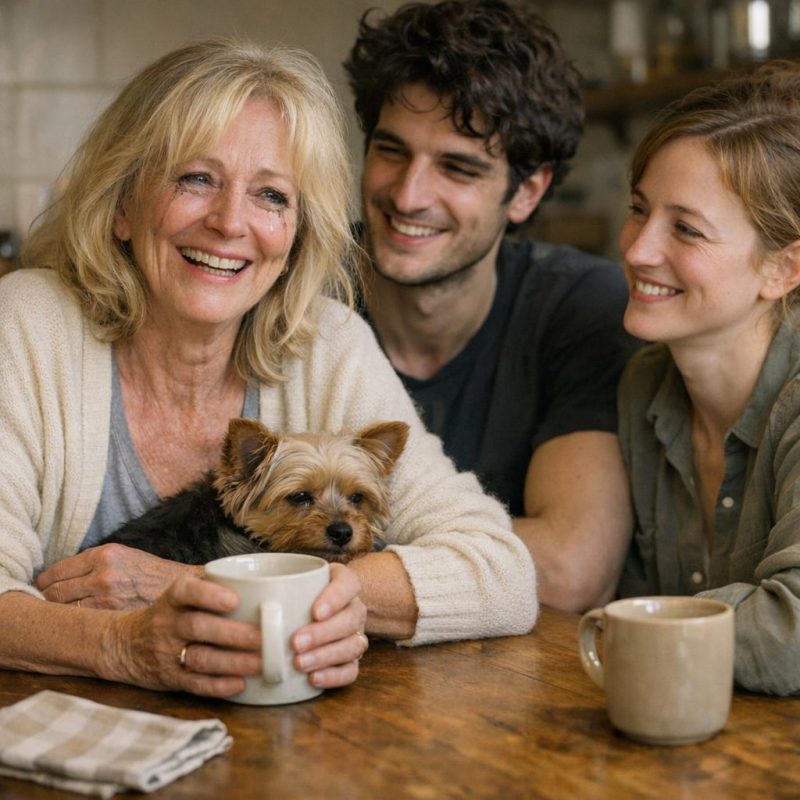 Image by RM AI
The Garage Treasures
Saturday morning found Derek and me in the garage, surrounded by dusty cardboard boxes I hadn't opened in years. 'Mom, this is perfect!' he exclaimed, untangling a string of multicolored Christmas lights that had somehow knotted themselves despite being neatly coiled when packed away. I smiled, pulling out an old velvet curtain that had once hung in our dining room. 'Your father always said these were too dramatic,' I told him, running my fingers over the faded fabric. 'Now they're vintage set dressing.' We worked methodically through the boxes until Derek suddenly went quiet. He'd found the container I'd avoided for three years—Robert's things. Inside was a Nikon camera, several photography books with dog-eared pages, and a sturdy tripod that looked barely used. 'Dad was into photography?' Derek asked, holding the camera with such gentle hands it made my heart ache. I nodded, sitting down on an old paint can. 'For about two years when you were maybe four. He took a community college class and everything.' I told him how his father would disappear for hours on weekends, returning with hundreds of photos of rust patterns on old farm equipment and close-ups of insects that no one but him found fascinating. 'He was terrible at it,' I laughed, 'but so passionate.' Derek turned the camera over in his hands, connecting with his father through this shared creative impulse neither of us had recognized before. 'You know,' I said, watching my son's face, 'he would have been your biggest fan.' What I didn't tell Derek was how Robert had eventually packed everything away, saying practical men didn't have time for artistic hobbies. I wondered, as Derek carefully placed the tripod beside his script, what other family legacies were hiding in these dusty boxes, waiting to be rediscovered.
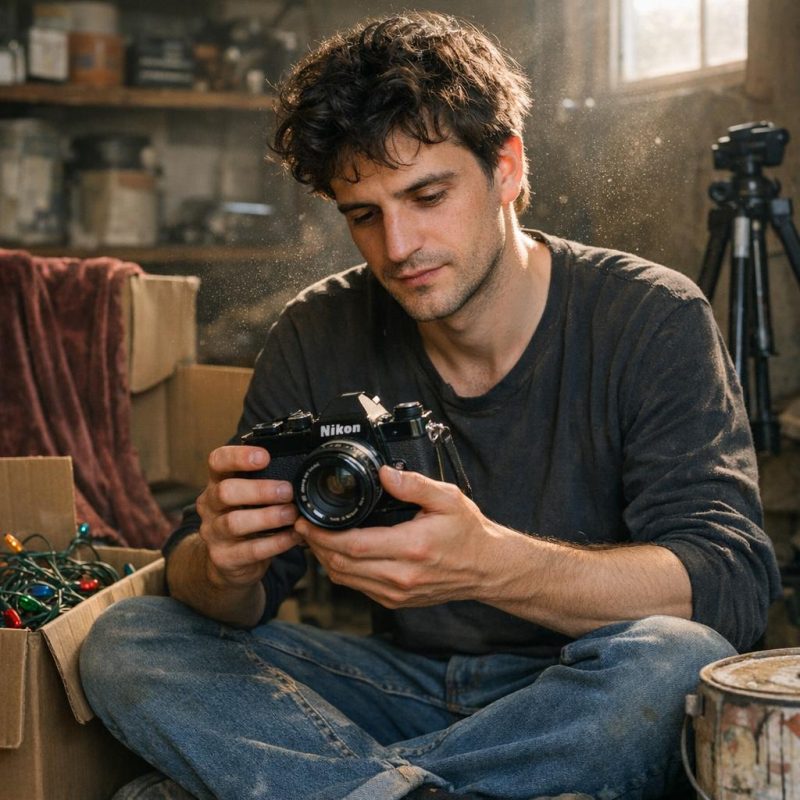 Image by RM AI
The Production Meeting
My kitchen table, which had seen decades of quiet family dinners and solitary breakfasts, was suddenly transformed into what looked like a Hollywood war room. Derek sat at the head, his script pages spread out like battle plans, while Tessa organized color-coded sticky notes on a makeshift calendar. Sylvia, who I'd only ever seen walking her Yorkie or gossiping over garden fences, was now taking notes with surprising intensity, occasionally interrupting with questions about 'practical effects' and 'ambient lighting.' Her nephew Marcus, a lanky twenty-something with a film school vocabulary, connected his laptop to my ancient TV so he could show examples of camera angles. 'Mrs. Harlan, we'll need to move your china cabinet about three feet to the left for the hallway shot,' Marcus explained, sketching something on a notepad. I nodded, serving another round of tuna sandwiches and pretending I understood terms like 'blocking' and 'coverage.' What struck me most was Derek's transformation—the way he leaned forward when speaking, how his hands gestured animatedly as he described a scene, the confidence in his voice when he disagreed with one of Marcus's suggestions. This was a side of my son I'd never seen before, and I wondered how long he'd been hiding this passion behind his quiet, practical facade. As I refilled coffee mugs and cleared away empty plates, I caught Tessa watching me with a knowing smile, as if to say, 'See? This is who he really is.' And I realized that opening my home to them had given me so much more than just company—it had given me a chance to truly see my son for the first time in years.
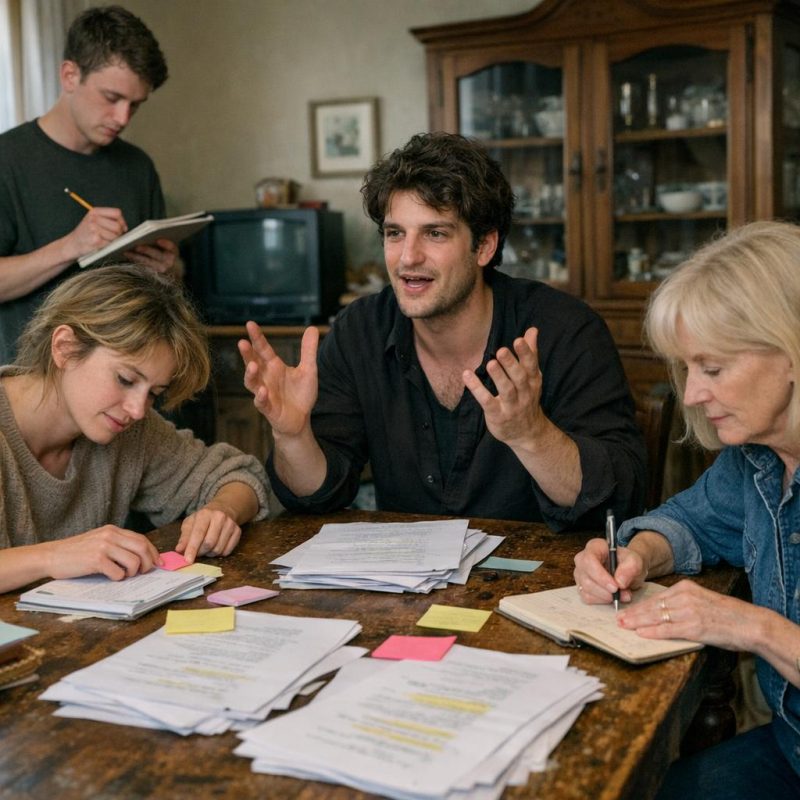 Image by RM AI
The Budget Reality
The excitement in the room dimmed like a light on a faulty switch when we started tallying up the actual costs. Even with borrowed equipment and volunteer help, there were expenses we couldn't avoid. Film permits, professional makeup (because corn syrup in your hair for hours isn't actually practical), food for the crew, and specialized lighting equipment that even Marcus's theater connections couldn't provide for free. I watched Derek's face fall as he stared at the growing list of numbers on his notepad. "I've been living on savings since the marketing firm let me go," he admitted quietly, his pen tapping against the table. "Maybe we should put this on hold until I find another job." The room went silent, and I felt something twist inside me. For years, I'd been careful with money—clipping coupons, buying store brands, keeping the thermostat at 68 in winter because that's what practical people do. But what was I saving for, if not for this? Without saying a word, I walked to the desk in the corner where I kept my checkbook, the same one Robert and I had opened together thirty years ago. I wrote a number that made Tessa gasp when I slid it across the table. Derek immediately started to protest, but I silenced him with a look I hadn't used since he was sixteen and tried to convince me that midnight was a "reasonable" curfew. "This isn't charity," I said firmly. "It's an investment. And when you're accepting your first award, you can thank me by paying for a better retirement home than the one I've been saving for." What I didn't tell him was that helping bring his vision to life felt like the first truly important thing I'd done since becoming a widow—and that the thought of seeing my name in his credits under "Executive Producer" made me feel twenty years younger.
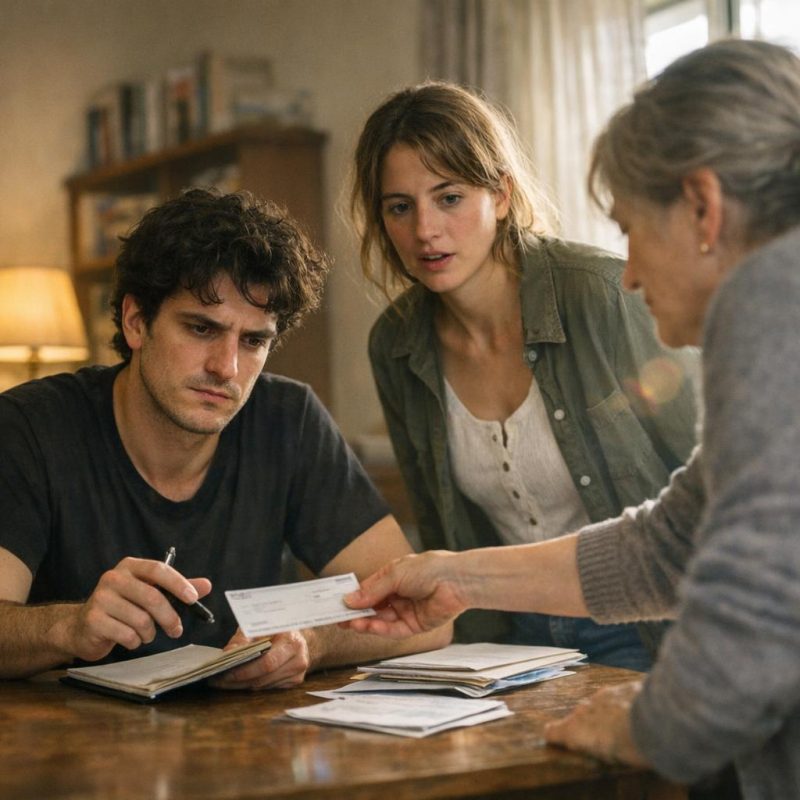 Image by RM AI
Casting Call
Word about Derek's movie spread faster than gossip at a church potluck. Before I knew it, my quiet little ranch house had transformed into what felt like a Hollywood casting studio. People I'd known for years showed up at my door with unexpected enthusiasm, clutching water bottles and wearing what they considered their 'camera-ready' outfits. Mrs. Abernathy from the church choir—a woman who'd once complained that the Christmas pageant was 'too theatrical'—arrived in a floral dress she must have saved from 1992, and proceeded to deliver such a convincing performance as the nosy neighbor that Derek's jaw literally dropped. 'I did community theater in college,' she explained with a wink that made me wonder what other secrets this 70-year-old soprano had been keeping. Even more surprising was Dr. Winters, my principal, who read for the mysterious handyman role with such gravelly intensity that Derek immediately pulled out his laptop and started rewriting the script right there in my living room. 'We need to give him at least three more scenes,' he whispered to Tessa, who nodded enthusiastically while adjusting the makeshift lighting setup we'd created from floor lamps and aluminum foil reflectors. As I served coffee and my famous lemon squares to this impromptu cast of characters, I caught Derek watching me from across the room, a look of wonder on his face. 'Mom,' he said later, helping me wash dishes after everyone had gone, 'did you know all these people were secretly waiting to be discovered?' I laughed, but the truth was, I was discovering things about my neighbors—and myself—that had been hidden in plain sight all along.
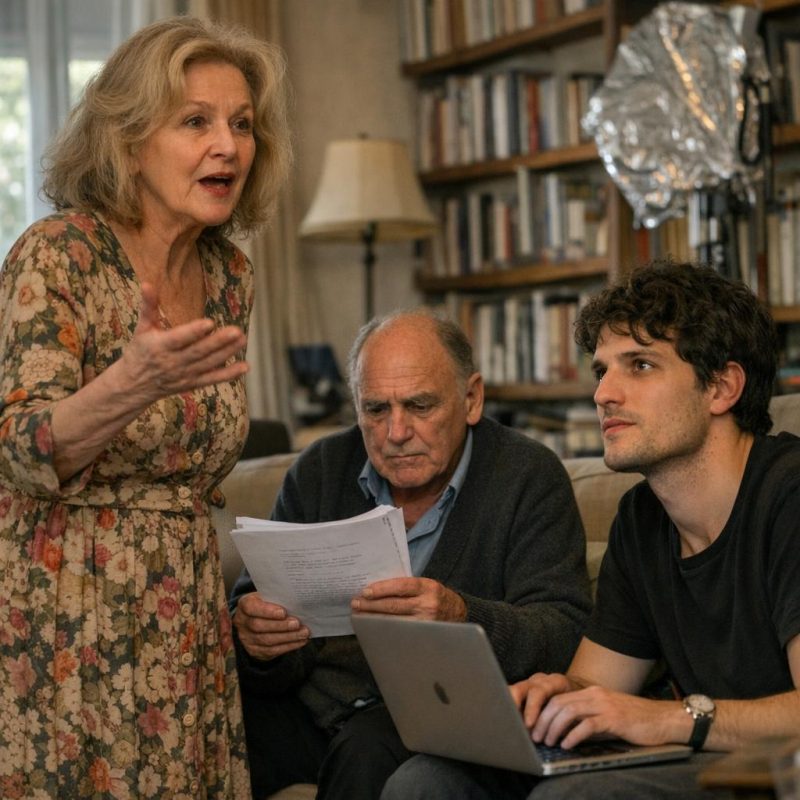 Image by RM AI
The Lead Role
Tuesday afternoon, Derek appeared in the doorway of the living room clutching a stack of papers, shifting his weight from one foot to the other like he used to do before asking for permission to stay out late in high school. 'Mom, I need to talk to you about something,' he said, his voice carrying that mix of excitement and terror I recognized from when he'd try new things. He sat beside me on the couch, thumbing through script pages until he found what he was looking for. 'The lead role—the widow who hears noises in her kitchen—I wrote it for you.' I laughed, thinking he was joking, but his expression remained earnest. 'Me? Derek, I'm not an actress. I can barely give a straight face when I lie about liking someone's haircut.' He shook his head and pointed to a character description: 'Margaret, 60, with quiet strength and observant eyes that miss nothing.' My protest died in my throat as I recognized myself in those words—not the tired, lonely woman I sometimes saw in the mirror, but the person my son had been watching all these years. 'You've always noticed everything, Mom,' he said softly. 'The way Dad's coffee mug had to face a certain direction. How you can tell when it's going to rain by the way the screen door sticks.' I felt my eyes welling up as I realized that while I thought I'd been invisible these past years, my son had been seeing me all along.
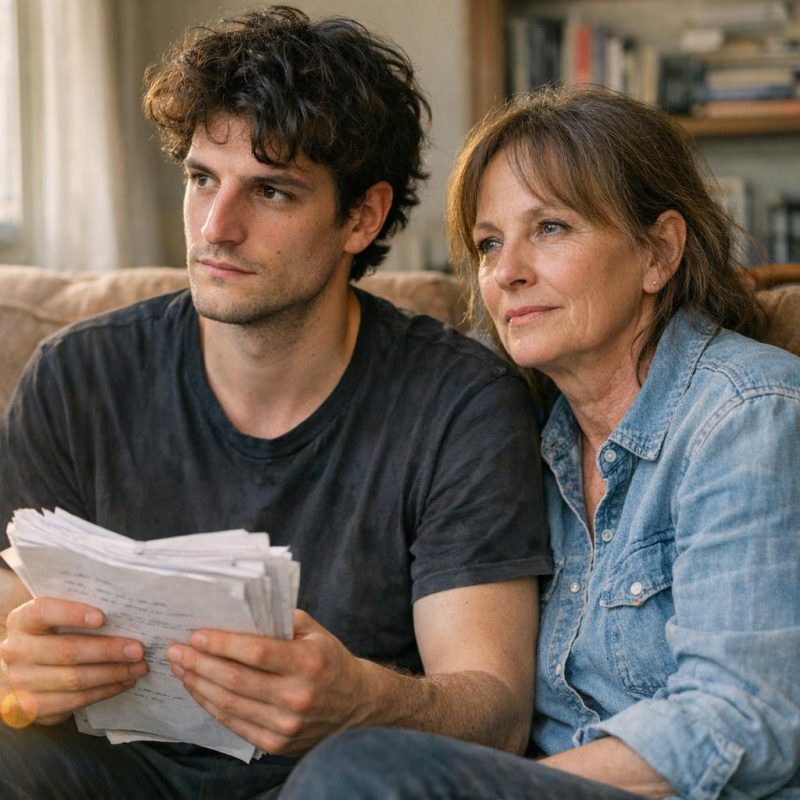 Image by RM AI
House Transformation
I barely recognized my own home by Wednesday afternoon. Marcus and his film school friends had descended like a whirlwind, transforming my tidy ranch house into what they called a 'production space.' My carefully arranged furniture had been pushed against walls or moved to entirely different rooms. Black cables snaked across my floors, secured with gaffer tape that Marcus assured me wouldn't damage my hardwood. 'We need to create depth in the frame, Mrs. Harlan,' he explained, adjusting my kitchen table at what looked like a completely impractical angle. The most unsettling part was watching them subtly alter my kitchen—the heart of my home for thirty years—into something that looked both familiar and vaguely threatening. They dimmed certain lights, added shadows where there shouldn't be any, and positioned my ordinary kitchen tools to create what Marcus called 'visual tension.' 'That's perfect,' Derek said, looking through the camera viewfinder at my perfectly normal refrigerator, somehow now transformed into something ominous. 'It's exactly how I imagined it.' I stood in the doorway of my own kitchen, feeling like a visitor in a place I'd cleaned and cooked in for decades, and realized with a start that this strange, shadowy version had existed in Derek's imagination all along. He'd been seeing the potential for something extraordinary in the ordinary spaces I took for granted. As I watched him direct Tessa to adjust a light that made my cookie jar cast a surprisingly sinister shadow, I wondered what other visions he'd been carrying around, just waiting for someone to help him bring them to life.
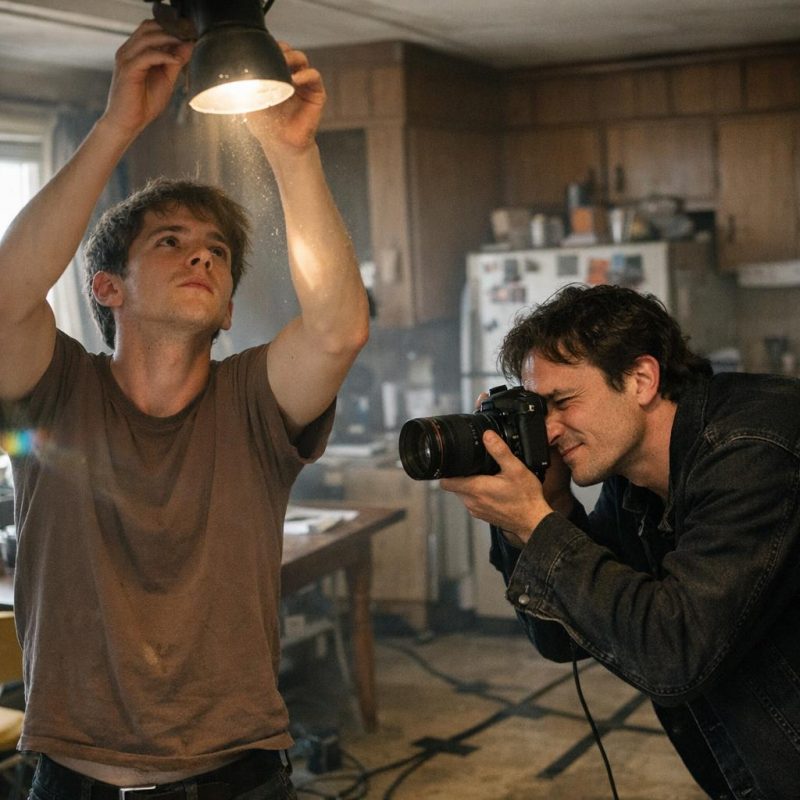 Image by RM AI
First Day Jitters
I woke up at 5:30 AM on filming day, a full hour before my alarm. My stomach was doing somersaults like I was sixteen again, waiting for my driver's test. Ridiculous, really—being nervous about acting in my own kitchen, in my own bathrobe, making coffee I'd made ten thousand times before. I found Derek already in the kitchen, hair sticking up in all directions, triple-checking equipment lists and muttering to himself. 'Mom! You're up!' he said, startled when I appeared. 'We don't start for three hours.' Tessa joined us shortly after, somehow looking fresh despite the early hour, calmly arranging color-coded index cards on the counter. 'Scene 4, Scene 12, then Scene 7,' she explained, seeing my confusion. 'We're shooting out of order to maximize the morning light.' By nine o'clock, my living room had transformed into a command center, with Marcus and his film school friends adjusting lights and testing microphones. When Marcus finally called 'Action!' for the first time, something extraordinary happened—Derek's voice changed. Gone was my hesitant son who second-guessed himself. In his place stood a director with quiet authority, gently guiding me through the simple act of measuring coffee grounds and turning on the burner. 'Perfect, Mom. Now look out the window like you're remembering something... exactly like that.' As I followed his instructions, I caught Sylvia watching from behind the camera, giving me a thumbs-up. In that moment, I realized I wasn't just helping my son make a movie—I was witnessing the person he was always meant to be.
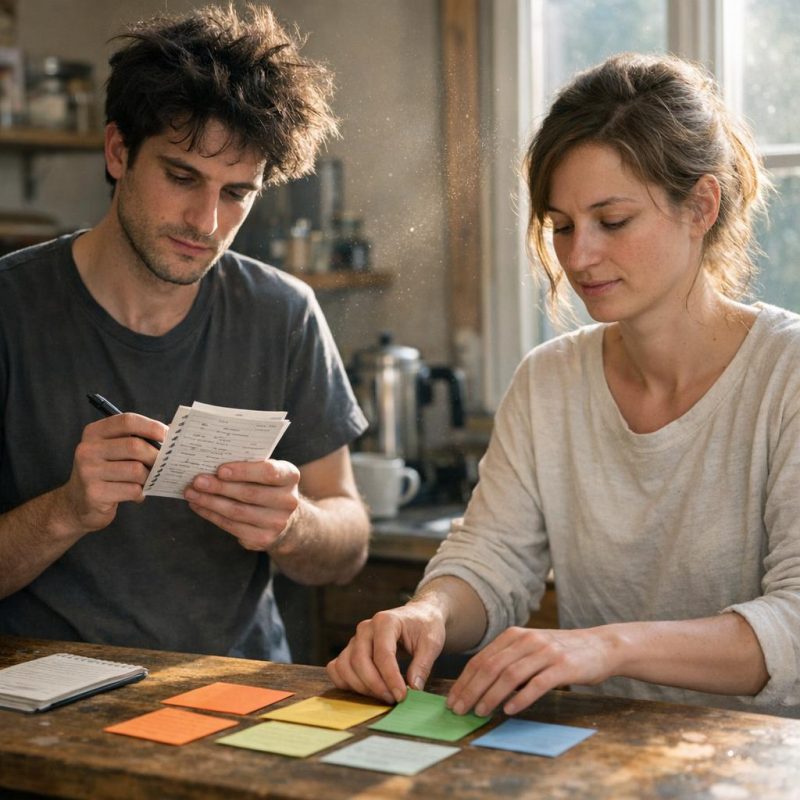 Image by RM AI
The Midnight Scene
The night of filming the pivotal kitchen scene arrived, and Derek insisted we shoot at exactly 2 AM for what he called 'authentic atmospheric tension.' I thought this was ridiculous—couldn't we pretend it was the middle of the night?—but I kept quiet. Tessa had transformed from girlfriend to professional makeup artist, mixing her concoction of corn syrup, chocolate, and food coloring with scientific precision. 'Hold still, Mrs. Harlan,' she murmured, dabbing fake blood onto my trembling hands. Under the harsh camera lights, the substance looked alarmingly real, glistening wetly against my skin. When Marcus finally called 'Action!' and I walked into my own kitchen to discover Tessa as the 'intruder,' I didn't have to fake my reaction. The gasp that escaped my lips was entirely genuine—my kitchen, my safe space for thirty years, had become something out of a nightmare. 'Perfect!' Derek whispered from behind the camera. 'That's exactly the look I wanted!' We wrapped filming around 4 AM, everyone exhausted but buzzing with a strange energy. Hours later, lying in bed as morning light filtered through my curtains, I found myself unable to sleep. The boundary between Derek's fictional story and my real fears had blurred. Just weeks ago, I'd lain in this same bed, listening for intruders and imagining the worst. Now I'd helped create those very fears on film. I wondered if this was how actors felt—carrying pieces of their characters home with them, unable to fully separate fiction from reality. What other parts of myself would I discover before Derek's film was complete?
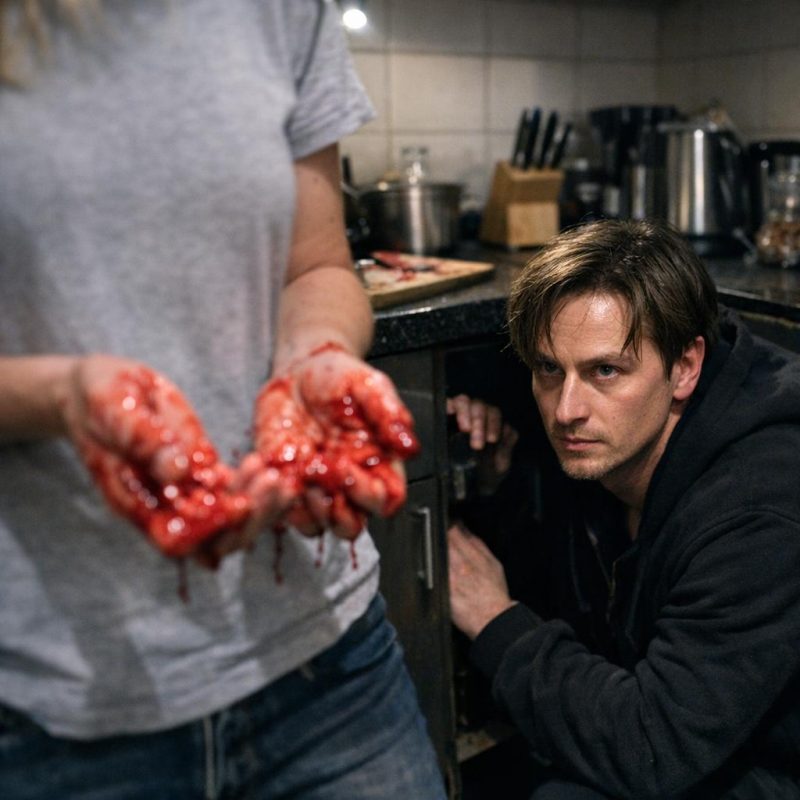 Image by RM AI
Neighborhood Interest
I never expected our little film project to turn my quiet street into the neighborhood hotspot, but that's exactly what happened. It started with Mrs. Donovan from three houses down, who arrived at my door clutching a still-warm apple cobbler and barely concealed curiosity. 'I noticed all those cars parked outside,' she said, peering past me into the living room where Marcus was adjusting lighting equipment. By the end of the week, my kitchen counter had disappeared under a parade of casseroles, brownies, and banana breads—each delivered by neighbors with the same thinly veiled excuse to see what was happening. Frank Miller, the retired mechanic who'd barely spoken ten words to me in five years, suddenly appeared with his collection of vintage tools that 'might look good on camera.' Even stern-faced Mr. Peterson offered his pristine 1970s garage as a potential filming location. 'It's period-appropriate,' he explained with unexpected enthusiasm. What touched me most was watching Derek, who'd hidden his passion for so long, now explaining camera angles and lighting techniques to a circle of captivated neighbors in my front yard. 'Your boy's got a real gift,' whispered Elaine from the garden club, squeezing my arm. 'Robert would've been so proud.' I nodded, unable to speak past the lump in my throat. This movie was bringing my son out of his shell, but it was also bringing life back to our street in a way I hadn't realized we all needed. And when the local newspaper called asking if they could do a feature on our 'neighborhood film production,' I wondered if Derek had any idea what he'd started with his midnight kitchen scene.
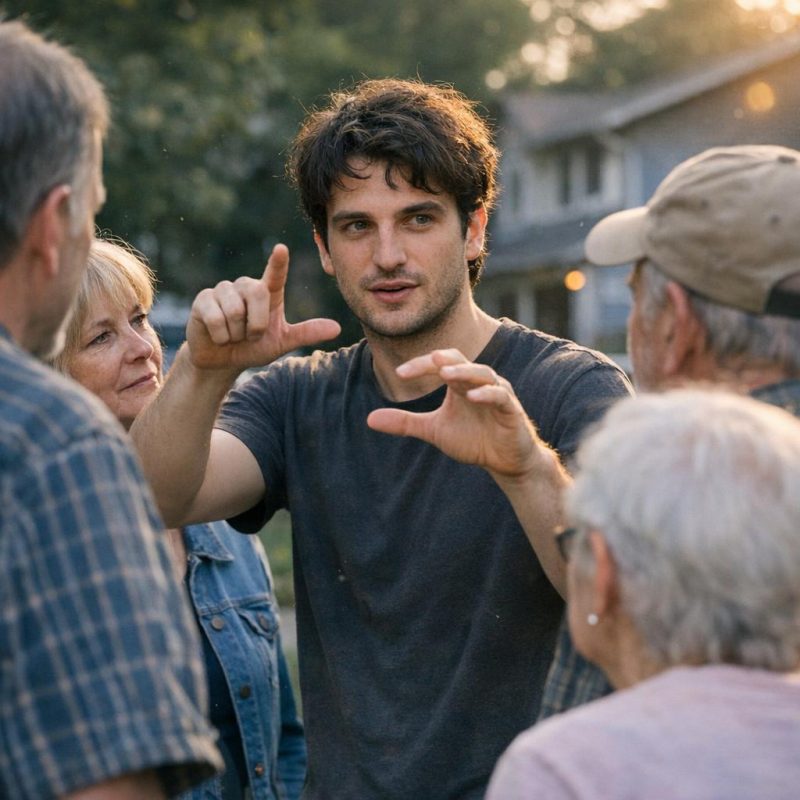 Image by RM AI
The Emotional Scene
Derek scheduled the most emotional scene for a Tuesday when almost everyone had the day off. Just me, him, and a skeleton crew of Marcus operating the camera and one lighting person. 'It's better this way, Mom,' he explained gently. 'Less pressure.' The scene required me to discover Robert's hidden letters in the back of our closet—letters my character never knew existed. But as I sat on the bedroom floor surrounded by prop shoeboxes and fake envelopes, Derek handed me something that made my heart stop: actual cards Robert had written me over the years, ones I'd tucked away after he passed because they hurt too much to read. 'I found these when we were cleaning the garage,' Derek whispered. 'You don't have to use them if it's too much.' I nodded, unable to speak. When Marcus called 'Action,' I didn't have to act. My hands trembled naturally as I opened the first card, seeing Robert's familiar handwriting. The tears that spilled down my cheeks weren't performance—they were the grief I'd been carrying for three years, finally finding its way out. Through blurry eyes, I saw Derek behind the camera, his own face wet with tears, nodding encouragingly. When he finally called 'Cut,' the room fell into a silence so profound I could hear the kitchen clock ticking downstairs. Derek knelt beside me, wrapping his arms around my shoulders. 'That was perfect, Mom,' he whispered. 'Dad would have loved it.' It wasn't until later that night, reviewing the footage on Derek's laptop, that I realized what we'd created wasn't just a movie scene—it was a memorial, a conversation between the living and the dead, and somehow, in sharing my most private pain, I'd found a way to breathe again.
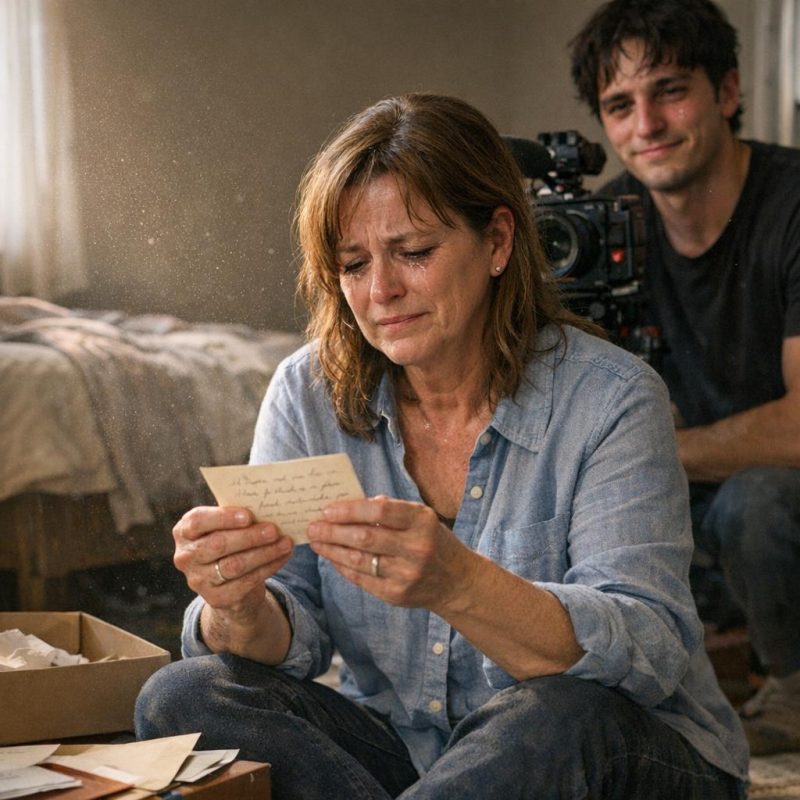 Image by RM AI
Technical Difficulties
I've never seen my son look so defeated. Marcus burst into my living room on Thursday afternoon, his face ashen, clutching his laptop like it contained nuclear launch codes. 'Mrs. Harlan, we have a problem,' he announced, his voice cracking. 'The memory card corrupted. We've lost three key scenes.' The room fell silent as Derek's face transformed from confusion to horror. He paced my living room like a caged animal, running his hands through his hair until it stood up in all directions. 'That's twelve hours of filming,' he muttered, his voice hollow. 'The kitchen reveal, the neighbor confrontation...' Tessa immediately went into crisis mode, connecting external drives to Marcus's laptop, her fingers flying across the keyboard. 'I might be able to recover some fragments,' she said, but her tone betrayed her doubt. I stood in the doorway, watching this unfold, my first instinct to jump in with reassurances, to somehow fix this for Derek the way I'd fixed scraped knees and broken hearts. But something stopped me. Instead, I made coffee and stepped back, giving him space to process this setback on his own terms. By midnight, when Tessa had salvaged what little she could, I watched something remarkable happen. Derek stopped pacing, pulled out his notebook, and started sketching a new storyboard. 'What if we reshoot it like this?' he asked, his voice gaining strength. 'We could use the corruption as part of the story—make it feel intentional, like the character's memories are fragmenting.' Marcus leaned forward, his exhaustion forgotten. 'That's... actually brilliant.' I smiled into my coffee mug, realizing that sometimes the best thing a mother can do is nothing at all. What none of them realized yet was that this crisis would ultimately give the film exactly what it had been missing.
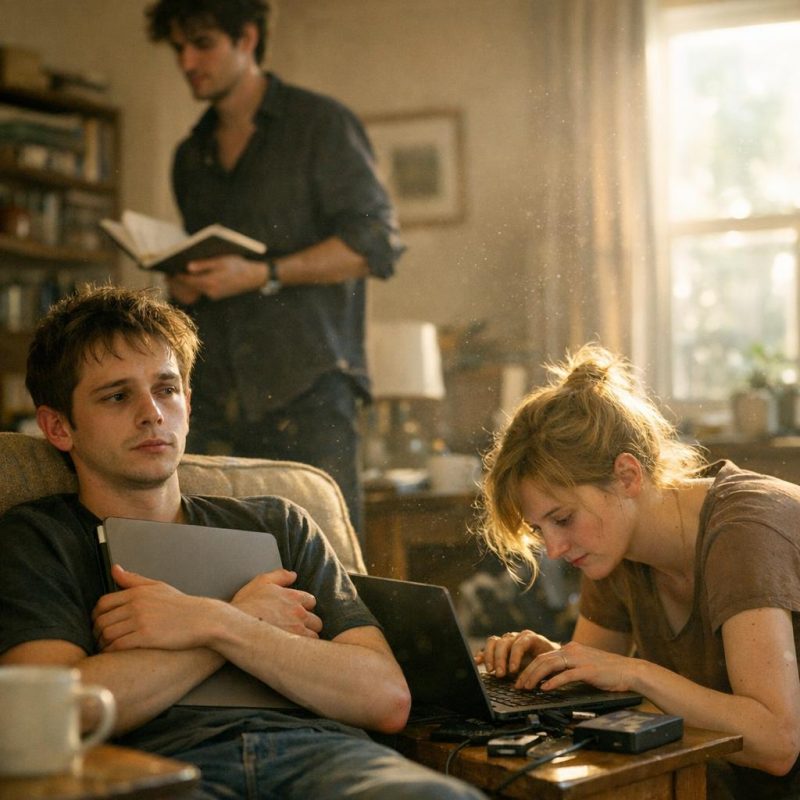 Image by RM AI
The Job Offer
The phone call came on Wednesday, right in the middle of our kitchen scene reshoot. Derek's phone buzzed on the counter, and when he glanced at it, his whole body tensed. 'I need to take this,' he said, stepping outside. Through the window, I watched him pacing on the lawn, one hand gesturing as he talked. When he came back inside, his face was a battlefield of emotions. 'That was Westridge Marketing,' he told me later that night as we sat at the kitchen table, the house finally quiet. 'They want me back. With a raise and benefits.' My heart sank as I recognized the conflict in his eyes—the same look Robert used to get when faced with impossible choices. 'What should I do, Mom?' he asked, sounding suddenly young. I reached across the table and took his hand. 'Your father got offered a regional manager position when you were eight,' I said. 'It meant more money, but also missing your baseball games.' I smiled at the memory. 'He turned it down to coach your Little League team instead. I asked him years later if he regretted it.' Derek leaned forward. 'What did he say?' 'He said watching you hit your first home run was worth more than any promotion.' The next evening, I overheard Derek in the guest room, his voice steady as he declined the offer. When he emerged, there was a lightness to him I hadn't seen in years. What he didn't know was that I'd found something in Robert's old desk drawer that would make his decision even more meaningful.
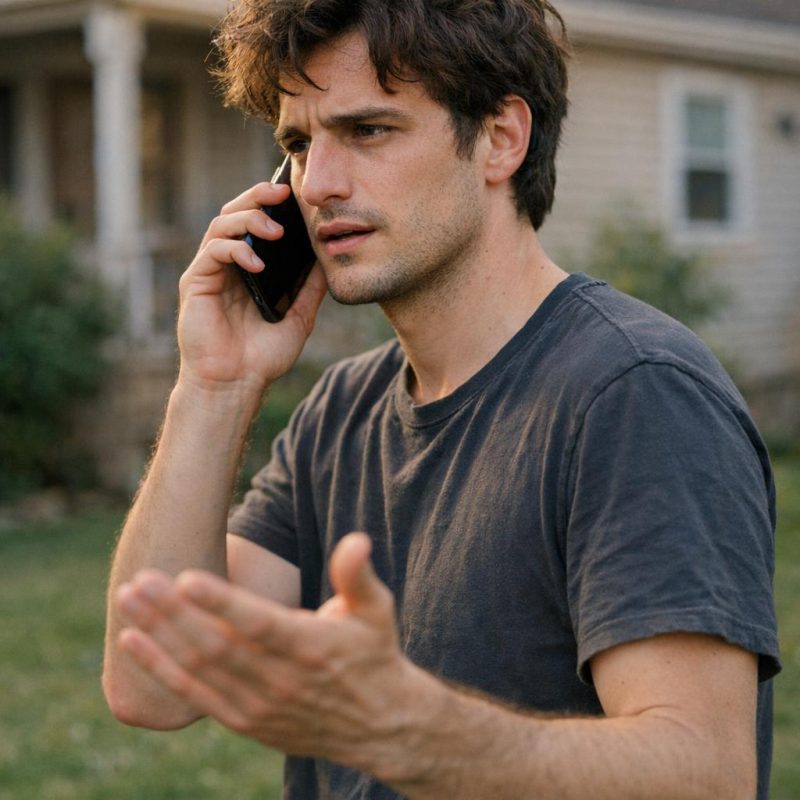 Image by RM AI
Tessa's Revelation
I was organizing the guest room while Derek and Marcus were out scouting a new location, trying to restore some semblance of order to my house. When I reached under the bed to retrieve a stray sock, my fingers brushed against something hard and flat. I pulled out a large black portfolio I'd never seen before. Curiosity got the better of me—I unzipped it and gasped. Inside were dozens of illustrations: beautifully rendered storyboards, character designs, and animated sequences that looked professional enough to be from a Pixar film. I was still sitting cross-legged on the floor surrounded by Tessa's artwork when she walked in. Her face went from surprise to embarrassment in an instant. 'Mrs. Harlan, I—' she started, then stopped, her cheeks flushing. Over tea at the kitchen table, the truth came out. She'd studied animation in college, graduated with honors, but had set it all aside for a 'practical' graphic design job she absolutely hated. 'My parents sacrificed everything for my education,' she explained, stirring her tea absently. 'They wanted security for me. Not...this.' She gestured at her drawings with a dismissive wave that broke my heart. I saw in her the same fear that had paralyzed Derek for years—the terror of pursuing a dream in a world that values a steady paycheck above all else. 'You know,' I said carefully, 'Derek's father kept a journal of story ideas he never showed anyone. I found it after he died.' I didn't tell her yet that I'd discovered it in Robert's desk drawer just yesterday, or that I was waiting for the right moment to show Derek that his storytelling gift wasn't just his own—it was his inheritance.
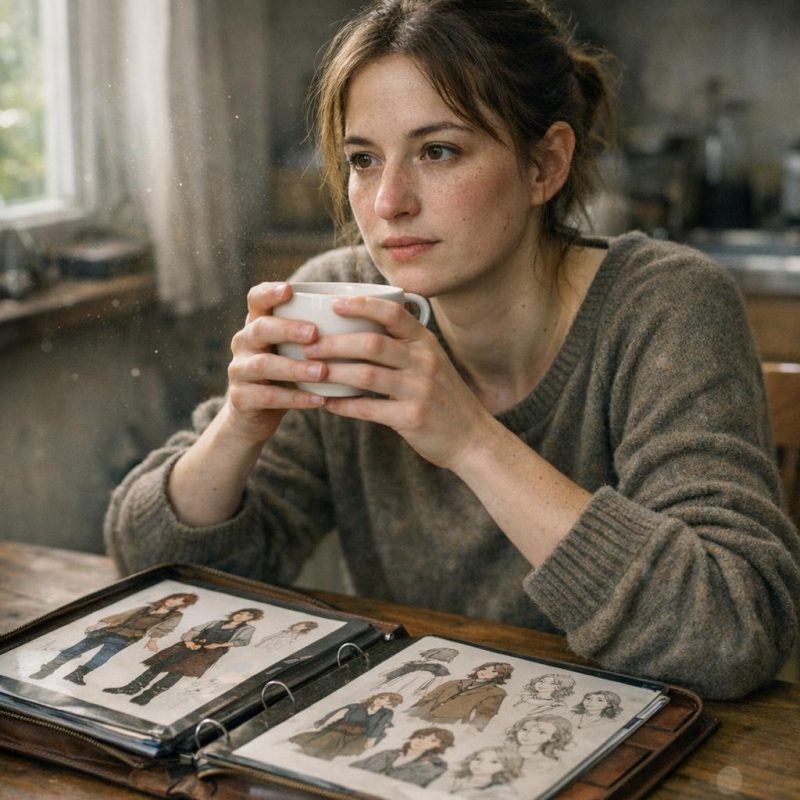 Image by RM AI
The Final Scenes
The final week of filming brought a strange hush to my once-chaotic house. Equipment still cluttered every corner, but there was a reverence to how everyone moved now, like we were approaching the end of something sacred. Yesterday, Derek positioned me by the kitchen window for the closing scene, where my character finally makes peace with her discoveries. 'I want the light to hit you just right, Mom,' he said, checking his watch repeatedly until the golden hour arrived. When it did, the kitchen transformed—dust motes dancing in amber beams that turned my ordinary countertops into something almost holy. I stood there, feeling the warmth on my face, and delivered my final lines without having to act at all. 'Sometimes the ghosts we fear aren't trying to haunt us,' I said, touching the letters prop we'd carefully placed on the table. 'They're just trying to finish conversations we weren't ready to have.' Behind the camera, Tessa wiped away tears while Marcus gave a silent thumbs-up. What had started as a simple thriller about things that go bump in the night had evolved into something none of us expected—a story about grief and second chances and finding courage in unlikely places. As Derek called the final 'Cut!' and the crew erupted in applause, I realized something that made my heart catch: in helping my son bring his vision to life, I'd somehow found my own story again. What none of us knew yet was that Robert had left behind one more surprise that would change everything.
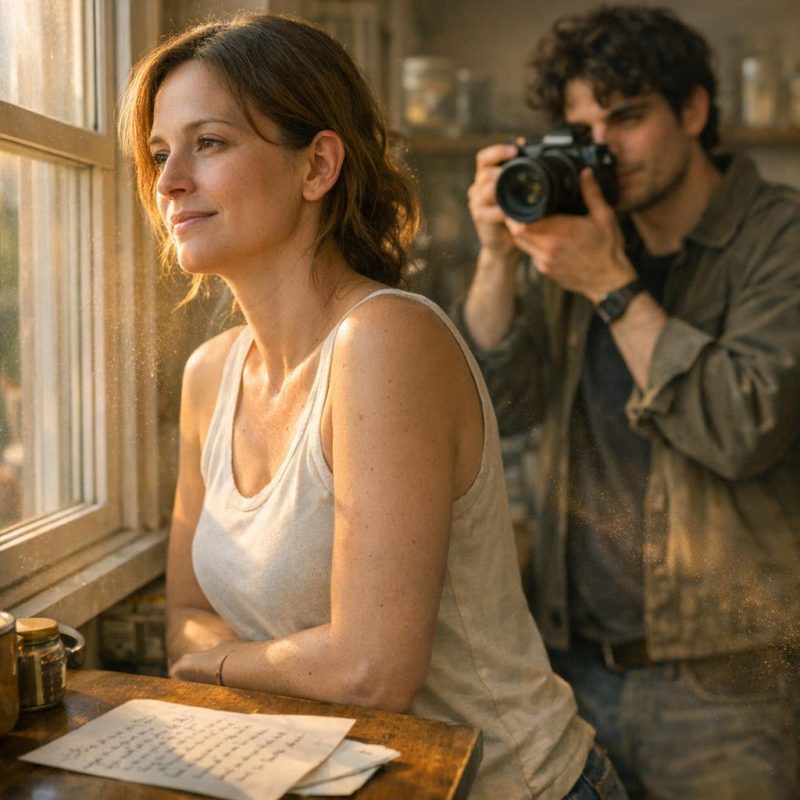 Image by RM AI
That's a Wrap
I never imagined my quiet little house would be filled with so much life and laughter. On our final day of shooting, people streamed in from all directions – Sylvia with her homemade cookies, Frank Miller actually wearing a clean shirt for the occasion, Marcus's film school friends with their technical jargon, and even Mr. Peterson, who'd become surprisingly invested in our little production. When Derek called the final 'Cut!' and announced 'That's a wrap!' with a catch in his voice, the room erupted in applause that seemed to make the walls vibrate. Sylvia, ever the rebel at 62, produced champagne bottles from her oversized purse like a magician pulling rabbits from a hat. 'I figured we'd need these,' she winked at me. Standing in the corner of my transformed living room, I watched Derek move through the crowd, accepting congratulations with a mixture of pride and disbelief. When our eyes met across the room, I saw something I hadn't seen since Robert passed – pure, uncomplicated joy. Tessa appeared at my side, her hand slipping into mine. 'He can't believe they all came for him,' she whispered. I squeezed her hand, my throat tight with emotion. 'Neither can I.' What none of them realized was that I'd slipped Robert's journal of story ideas into Derek's camera bag earlier that morning, along with a note I hoped would change everything.
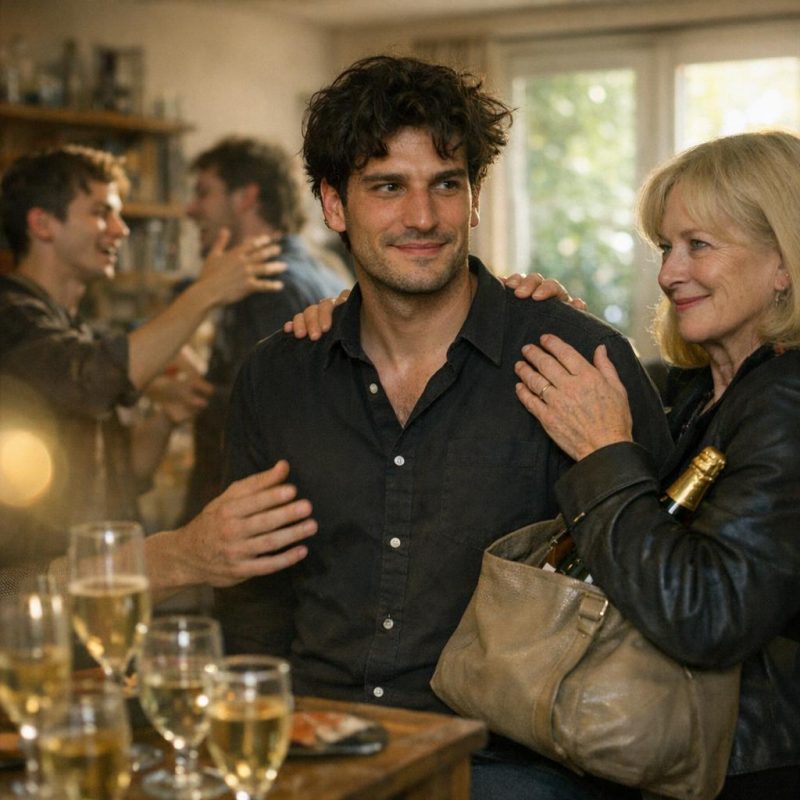 Image by RM AI
The Quiet House Returns
It's been three days since the last camera was packed away, and I swear my house has never felt so empty. I wander from room to room, straightening picture frames that don't need straightening and fluffing pillows that are already perfectly fluffed. The kitchen, once command central for our little film crew, now feels cavernous. I find myself making too much coffee out of habit, forgetting there aren't a dozen eager hands reaching for mugs anymore. Last night, I actually jumped when the refrigerator kicked on—the silence had grown so complete that any noise felt like an intrusion. 'This is ridiculous,' I told myself this morning, standing in the middle of my spotless living room. 'You lived alone for three years before all this.' But that's just it. The house feels different now, like it's holding its breath, waiting. When Derek and Tessa came down for breakfast, I caught myself feeling relieved at the sound of their footsteps on the stairs. 'We should be out of your hair by the end of the month,' Derek mentioned casually, pouring cereal. I nodded and smiled, not trusting myself to speak. How do you tell your grown son that you're dreading the return to normalcy? That the creative chaos of his film brought something back to life in these old walls—and in me? As I sit here tonight at my kitchen table, listening to the familiar tick of the clock that's kept me company for decades, I run my fingers over a small scratch in the wood where Marcus's camera tripod had stood. Physical proof that it all really happened. What I haven't told Derek yet is that I found something else while cleaning up—something that might change his plans about moving out so soon.
 Image by RM AI
The Editing Cave
Derek has turned my guest room into what he calls his 'editing cave,' and I swear I've seen less of him now than when he lived across town. The transformation happened gradually—first a monitor appeared on the desk, then another, until suddenly the floral bedspread was buried under hard drives and cables that snake across the floor like technological vines. He spends hours in there, hunched over his laptop with headphones clamped to his ears, emerging only for coffee refills and bathroom breaks. Sometimes I knock with a sandwich on a plate, and he'll look up with that dazed expression of someone pulled suddenly from another world. 'Mom, check this out,' he'll say, pulling me down beside him to watch a scene. It's surreal seeing my kitchen through his lens—the ordinary space I've cooked in for decades suddenly mysterious, shadows elongated, colors deepened. Even stranger is seeing myself on screen, my familiar face somehow transformed into someone else's story. I've learned to give him real feedback, not just the automatic praise mothers default to. 'The pacing feels off there,' I'll say, or 'That transition is jarring.' The first time I criticized something, his head snapped up in surprise, but now he nods thoughtfully, making notes. Yesterday, I found him asleep at the desk, face pressed against the keyboard. As I draped a blanket over his shoulders, I noticed what was frozen on his screen—a frame of me standing at the kitchen window, bathed in golden light, looking more peaceful than I've felt in years. What Derek doesn't know is that I've been keeping a journal about this whole filmmaking experience, and the pages are filling up with observations he might find surprising.
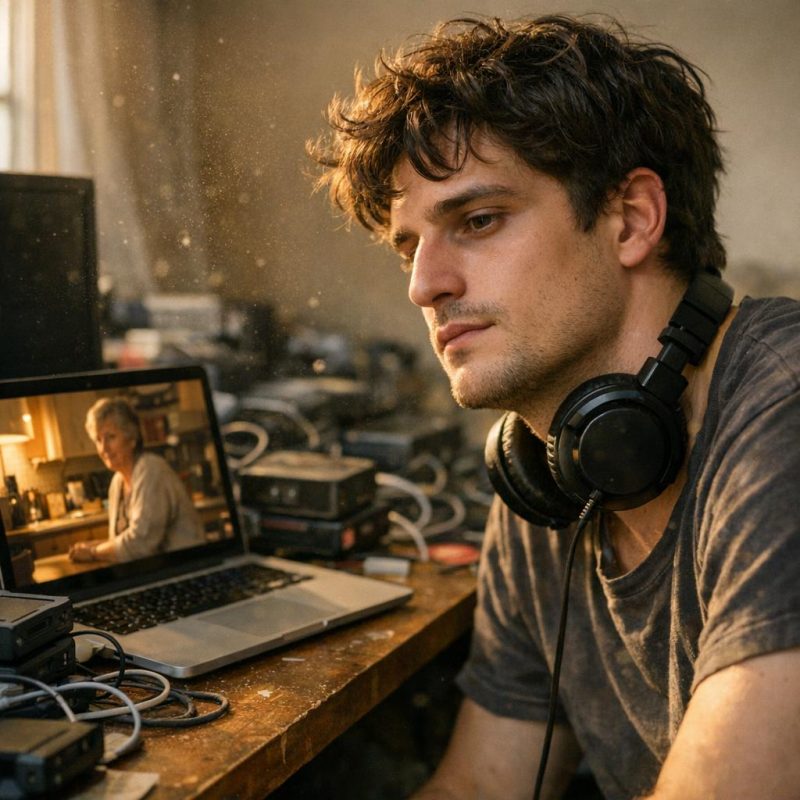 Image by RM AI
Tessa's Contribution
I never expected to find such joy in watching two people create side by side. This morning, Tessa set up her digital tablet at my dining table—the same table where Robert and I shared countless meals, where Derek did his homework as a boy. 'Is it okay if I work here, Mrs. Harlan?' she asked, her voice hesitant. 'The light is perfect.' I nodded, oddly touched by her asking permission in a house she'd been living in for weeks. By afternoon, a rhythm had developed—Derek hunched over his laptop in one corner, cutting footage with intense concentration, while Tessa's stylus danced across her tablet, creating fluid, haunting images for the title sequence. I brought them coffee and watched over their shoulders as her drawings came to life—shadowy figures that seemed to breathe, kitchen objects that transformed into something otherworldly. 'That's exactly what I was trying to describe!' Derek exclaimed when she showed him a particularly striking animation of light filtering through blinds. The way they worked together—finishing each other's sentences, building on each other's ideas—revealed a depth to their relationship I hadn't fully appreciated before. They weren't just a couple sharing rent and responsibilities; they were creative partners who understood each other's visions. As I slipped away to give them space, I found myself hoping they'd build a life that made room for both their talents. What I didn't tell them was how watching them work reminded me of evenings long ago, when Robert would sketch building designs at this very table while I graded papers beside him, our creative worlds different but complementary.
 Image by RM AI
The First Cut
Derek stood in the doorway of the kitchen, shifting his weight from one foot to the other like he used to do as a teenager before asking to borrow the car. 'Mom, I have something to show you,' he said, his voice carefully neutral. 'It's just a rough cut—no proper sound design yet, and the color grading is temporary.' I followed him to the living room where he'd set up his laptop on the coffee table. We sat side by side, our shoulders touching, as he pressed play. For twenty-eight minutes, I forgot I was sitting in my own living room. I forgot I was watching myself on screen. The kitchen I'd cooked in for decades transformed into something both familiar and otherworldly. The story that had started as strange noises in the night had evolved into something profound about grief and second chances. When my character finally stood in that golden light by the window, delivering those lines about conversations left unfinished, I felt tears sliding down my cheeks. As the screen faded to black, Derek turned to me, his expression a mixture of pride and vulnerability. 'Well?' he asked softly. I opened my mouth to speak, but nothing came out. How could I explain that what I'd just witnessed wasn't just a movie—it was my son's heart laid bare? It wasn't perfect—some transitions were abrupt, a few scenes ran too long—but it was honest in a way that left me breathless. I reached for his hand and squeezed it, finding my voice at last. 'It's beautiful, Derek,' I whispered. 'Your father would be so proud.' What I didn't tell him was that watching the film had unlocked something in me I thought was gone forever.
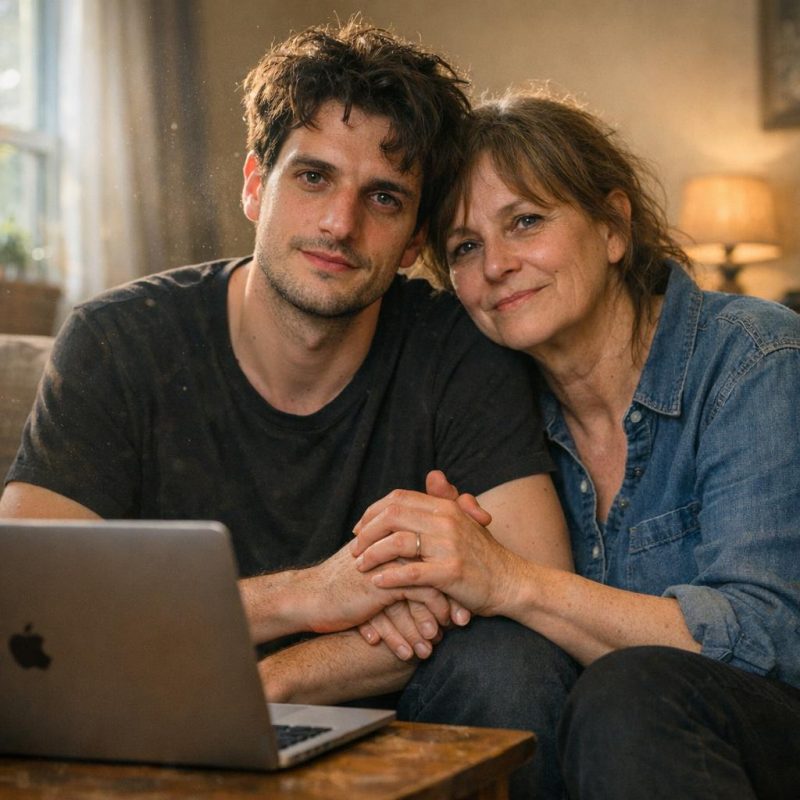 Image by RM AI
The Music Question
I never thought our biggest film challenge would be solved in a church pew. After weeks of Derek fretting over the soundtrack—'Music makes or breaks a film, Mom'—I casually mentioned our composer conundrum to Eleanor after Sunday service. Eleanor, who's played our church piano for fifteen years, looked at me with such excitement I thought she might drop her hymnal. 'Marcia, I studied film scoring at Berklee before life took a different turn,' she confessed, her eyes lighting up like I'd offered her a winning lottery ticket instead of an unpaid gig. That evening, Eleanor arrived with her keyboard and laptop, setting up in our living room like she belonged there. Derek looked skeptical at first—probably picturing church hymns overlaid on his psychological thriller. But when Eleanor's fingers touched the keys, producing haunting minor chords that seemed to pull the shadows from the corners of the room, his expression changed completely. 'That's...exactly what I was hearing in my head,' he whispered. I watched goosebumps rise on my arms as she layered in delicate, unsettling melodies that somehow captured both the fear and the longing in our story. Tessa sat cross-legged on the floor, sketching frantically, inspired by each new musical phrase. 'I can't pay you what this is worth,' Derek admitted after two hours of collaboration. Eleanor just smiled and proposed her trade: music for mentorship. 'My high school students would lose their minds if a real filmmaker gave them a workshop.' As I brought them fresh coffee, I caught Derek showing Eleanor Robert's journal, pointing to something written in the margins that made them both nod in understanding. What they didn't realize was that I'd recognized one of Eleanor's melodies—it echoed a lullaby Robert used to hum to Derek when he was small, a coincidence too perfect to be merely chance.
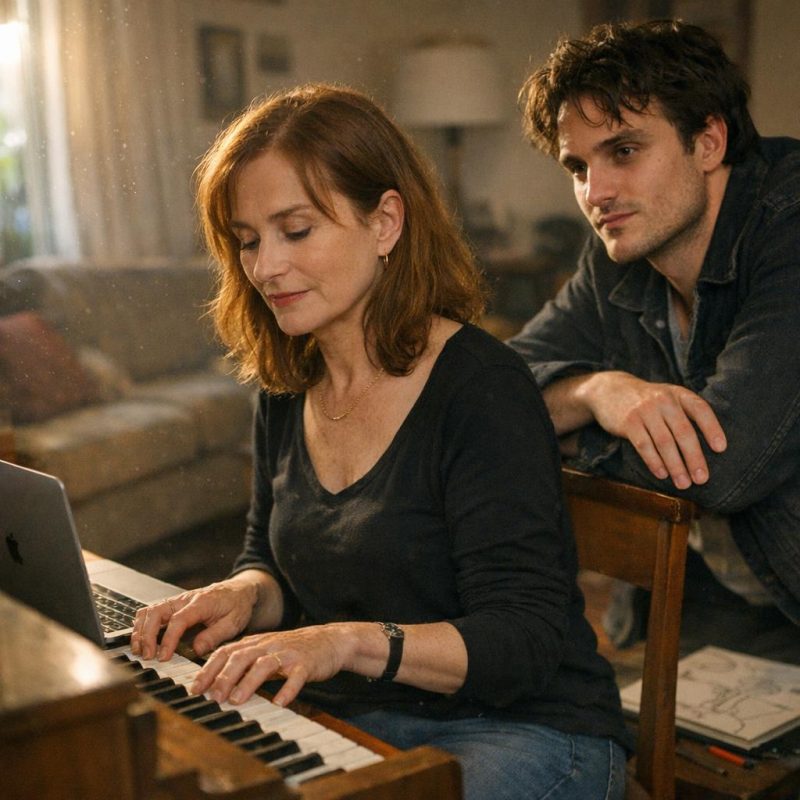 Image by RM AI
Festival Submissions
I never imagined I'd be sitting at my kitchen table at 11 PM, surrounded by printouts of film festival submission guidelines while my son paced nervously behind me. Marcus had arrived earlier that evening with a stack of applications and a gleam in his eye that reminded me of Robert when he was onto something good. 'There's at least six festivals within driving distance,' Marcus explained, spreading the papers across my table. 'Plus these online ones that don't require travel.' Derek kept shaking his head, finding reasons to hesitate. 'The submission fees add up,' he muttered, or 'They probably get thousands of entries.' I watched him making excuses, recognizing the fear beneath them. It wasn't about money or competition—it was about putting his heart out there for strangers to judge. Tessa caught my eye across the table, and I knew we were thinking the same thing. 'What if we split the submission costs?' I suggested casually. 'Consider it my investment.' Derek looked up sharply. 'Mom, you've already done enough.' I reached for his hand. 'Your father never showed his building designs to anyone but me,' I said quietly. 'He was always waiting for the perfect moment that never came.' The room went still. Finally, Derek sat down at the laptop and began filling out the first application. When he reached the final screen, his finger hovered over the mouse. 'What if they hate it?' he whispered. I placed my hand on his shoulder. 'Then we'll know exactly who to prove wrong next time.' He clicked submit, and something shifted in the air between us. What he didn't know was that I'd already made a secret plan for premiere night, regardless of whether any festival accepted us.
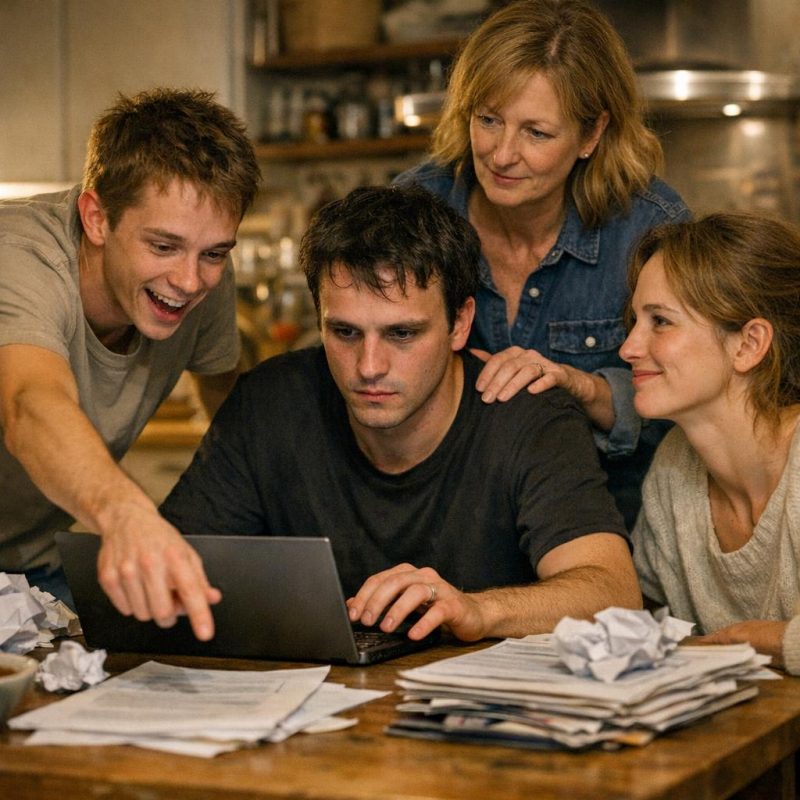 Image by RM AI
The Job Hunt
I found Derek at the kitchen table this morning, hunched over his laptop with a mug of cold coffee beside him. The circles under his eyes told me he'd been there a while. "What are you looking at?" I asked, pouring myself a fresh cup. He sighed and turned the screen toward me—job listings, dozens of them scrolled past. "Just trying to be responsible," he said with a forced smile that didn't reach his eyes. "Film festivals don't pay the bills." I sat down across from him, watching as he clicked on another generic office position. "What kind of job are you actually looking for?" I asked carefully. Derek's shoulders slumped. "Anything that pays the bills," he admitted, and the defeat in his voice broke my heart. I reached across the table and gently closed his laptop. "Derek Robert Harlan," I said, using his full name like I used to when he was small, "you just finished a film. Why on earth are you looking at data entry positions?" His expression shifted—surprise, then something like embarrassment. That afternoon, after some gentle but persistent nudging, I watched over his shoulder as he crafted a resume highlighting his editing skills and applied to Westridge Media, a local production company that makes commercials and corporate videos. "It's not exactly Hollywood," he muttered as he hit submit. "Neither was Spielberg's first job," I replied. What Derek didn't know was that I'd already made a phone call to an old friend whose daughter worked in their HR department.
 Image by RM AI
The First Acceptance
I was elbow-deep in dishwater when I heard the front door slam open with such force I nearly dropped my favorite mug. Derek burst into the kitchen, his face flushed and his eyes wild with excitement. 'Mom! MOM!' he shouted, waving his phone like it contained the secrets of the universe. 'They accepted it! Pinewood Film Festival wants "The Kitchen Light"!' I stood there dripping suds onto the floor, trying to process his words. The regional festival wasn't Sundance, but it was respected, curated, legitimate. My son's film—our film—had been chosen. Before I could even dry my hands, Derek had lifted me off my feet in a bear hug that knocked the breath from my lungs. 'Put me down!' I laughed, but my voice was thick with emotion. Within minutes, Tessa arrived home to our impromptu celebration, and soon we were dancing around the living room like fools, calling everyone who'd helped—Sylvia, Marcus, Eleanor—each conversation punctuated with whoops and happy tears. That night, after the initial euphoria had settled into a warm glow, I paused outside the guest room door, hearing Derek and Tessa talking in hushed, excited tones. 'We could actually do this,' Derek was saying, his voice carrying a note of wonder I hadn't heard since he was a child. 'Not just as a hobby, but for real.' I stood there in the hallway, my heart so full it ached, remembering Robert and how he'd never gotten his chance. What Derek didn't know yet was that I'd already started planning something special for the premiere—something that would connect his future to his father's past in a way neither of them could have imagined.
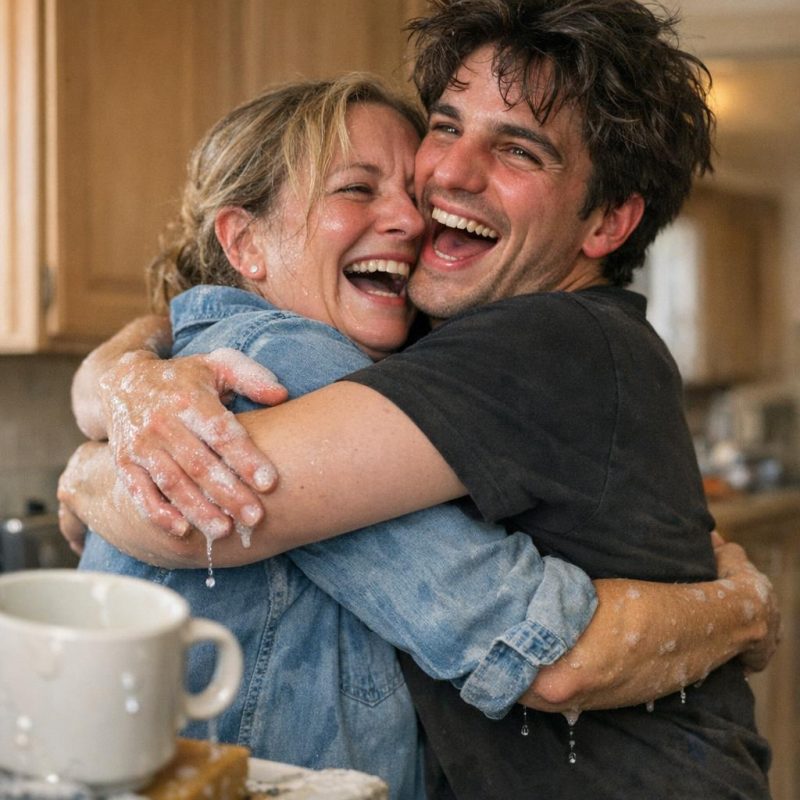 Image by RM AI
The Interview
I heard the front door swing open with such force that the little ceramic owl on the entryway table wobbled precariously. Derek burst into the kitchen like a human tornado, his face flushed with excitement. 'Mom! I got it!' he announced, dropping his portfolio on the counter with a thud. 'They offered me the job right there in the interview!' I set down my coffee mug and felt my heart swell with pride as he described how the production company executives had practically fallen over themselves after seeing clips from 'The Kitchen Light.' 'They said my visual style was exactly what they've been looking for,' he explained, pacing the kitchen floor. 'The pay isn't amazing, but it's steady work with real filmmakers.' Over dinner, Derek couldn't stop talking—about the commercial projects they were working on, the equipment they used, the award-winning director he'd be assisting. His hands gestured wildly as he spoke, reminding me so much of Robert when he was excited about a new building design. The joy radiating from him was infectious, and I found myself smiling so hard my cheeks hurt. But then, between bites of lasagna, I asked the question that had been gnawing at me: 'So, does this mean you and Tessa will be looking for your own place soon?' The words hung in the air like a sudden frost. Derek's fork paused halfway to his mouth, and I watched a shadow cross his face. In that moment, I realized I'd just voiced my greatest fear out loud—the return of the empty house, the silence, the solitary cups of coffee. What I didn't expect was his answer, or the mysterious envelope Tessa pulled from her bag moments later.
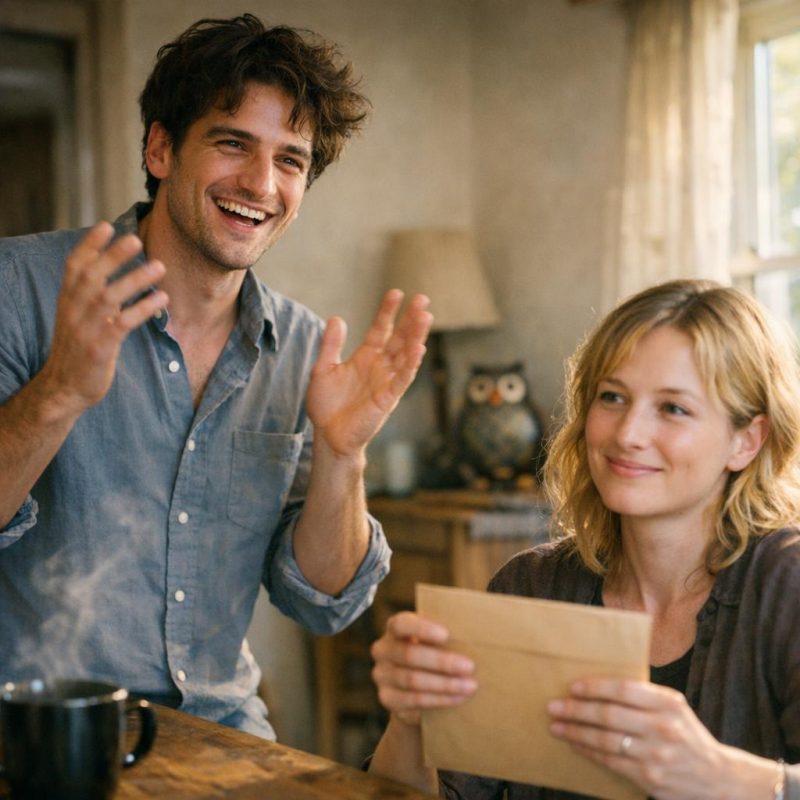 Image by RM AI
The Community Screening
I never imagined our little film would touch so many hearts. The community center's multipurpose room—usually home to bingo nights and PTA meetings—was transformed with borrowed chairs, a projector Marcus had convinced his university to lend us, and Sylvia's handmade movie posters. We expected maybe thirty people. Over seventy showed up. They spilled into the aisles, leaned against walls, and perched on windowsills. My coworkers from the elementary school brought homemade popcorn in paper bags. Mr. Peterson, who'd complained about our late-night filming, arrived with his wife and a bottle of sparkling cider 'for the director.' As the lights dimmed and the first notes of Eleanor's haunting score filled the room, I didn't watch the screen. Instead, I watched faces illuminated by the flickering light—Mrs. Abernathy gasping at the first reveal, Frank Miller leaning forward during the tense kitchen scene, Sylvia dabbing her eyes during the final monologue. When the credits rolled and Derek's name appeared, the applause started like a thunderstorm—hesitant at first, then building to something that seemed to shake the walls. Derek stood at the front, his face flushed, hands fidgeting with his shirt cuffs the way he did as a child when overwhelmed. 'I just want to thank everyone who helped,' he began, his voice cracking. 'Especially my mom, who let me turn her kitchen into a horror set.' The laughter and applause that followed made my eyes sting with tears. What none of them realized, as they congratulated my son and asked about his next project, was that I'd already received a mysterious phone call that morning that would change everything.
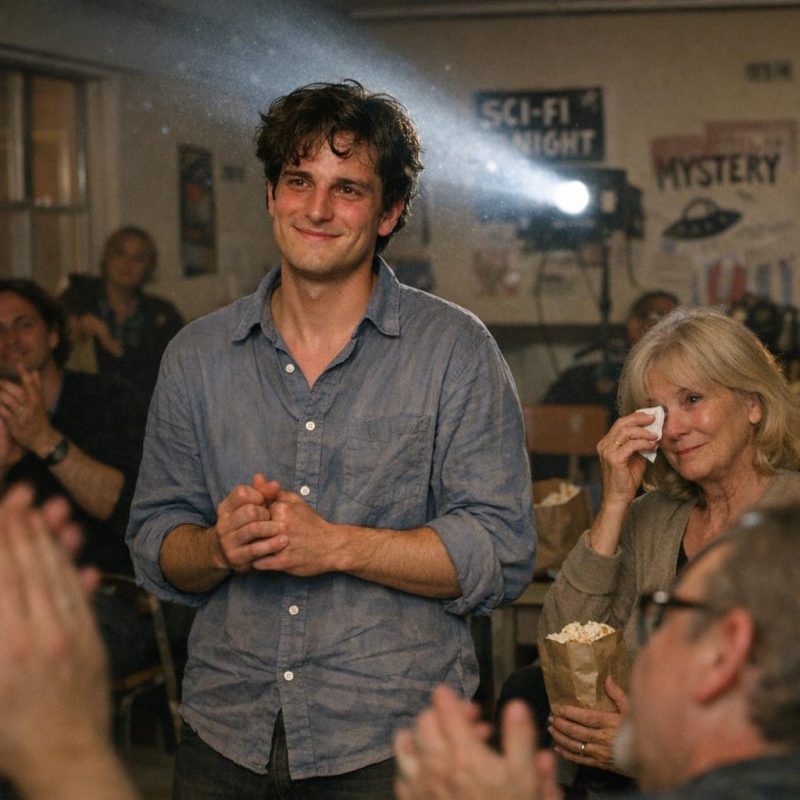 Image by RM AI
Festival Preparations
The house has been a whirlwind of activity this week. Every flat surface is covered with something festival-related—Derek's freshly printed business cards arranged in neat stacks on the coffee table, Tessa's poster drafts spread across the dining room, and garment bags hanging from doorframes. I've been making lists upon lists: what to pack, who to contact, which screenings we absolutely can't miss. Yesterday, Derek looked up from his laptop with that worried expression I know too well. 'Mom, you're coming with us, right?' he asked, his voice hesitant. I froze, dishcloth in hand. 'I thought this was your moment,' I replied carefully. 'You two should enjoy it without your mother tagging along.' Tessa appeared in the doorway, arms crossed. 'Mrs. Harlan, you're literally the star of the film,' she said with that gentle firmness I've come to admire. 'Plus, we need you there.' The way they both looked at me—like my presence was essential, not just tolerated—made my throat tight. That night, after they'd gone to bed, I found myself doing something I haven't done in years: online shopping for a dress that doesn't scream 'elementary school office staff.' I scrolled through pages of options, wondering what kind of woman attends a film festival at 59. Not the grieving widow in sensible shoes, but someone new—someone who stands under lights while strangers applaud a story told in her kitchen. What Derek doesn't know is that I've already received a call from someone who saw our community screening—someone whose interest in our little film might change everything.
 Image by RM AI
The Road Trip
I never thought I'd feel this excited about a road trip at my age. The four-hour drive to the festival city feels like we're crossing some invisible boundary between my old life and whatever comes next. Derek insisted on packing the car himself, meticulously fitting our suitcases, poster tubes, and equipment bags like pieces in a puzzle game. 'Mom, did you really pack four pairs of shoes?' he asked, holding up my overnight bag with mock horror. I just smiled and added another snack bag to the growing pile. Now we're cruising down the highway, windows cracked despite the chill, and Derek's playlist is blasting songs from his high school years. 'Remember this one, Mom?' he shouts over the music, and suddenly we're both belting out lyrics to songs I pretended to hate when he was sixteen. In the passenger seat, Tessa is filming snippets of our journey on her phone, capturing Derek's off-key singing and my laughter. 'Documentary footage,' she explains with a wink. 'The making of a filmmaker.' When we stop at a roadside diner for lunch, I watch them huddled over the festival program, circling screenings and panels with such intensity it makes my heart ache with pride. 'You know,' Derek says between bites of his burger, 'this wouldn't be happening without you, Mom.' What he doesn't realize is that as I watch him in the rearview mirror, his face animated as he describes the other films we'll see, I'm silently thanking him for giving me something I thought I'd lost forever after Robert died – a sense that life still holds unexpected adventures, even for a 59-year-old school secretary who once thought her story was already written.
 Image by RM AI
Festival Jitters
I never imagined I'd feel so out of place in a hotel lobby at my age. The Pinewood Film Festival buzzes with energy—young filmmakers in stylish black outfits networking over espressos, critics huddled in corners dissecting camera angles, and industry people with lanyards scanning the room like hawks. Derek, who couldn't stop talking during our road trip, has gone eerily quiet beside me. 'Everyone looks so... professional,' he whispers, fidgeting with his badge. I watch his confidence shrinking with each passing minute as he scrolls through the festival program. 'Look at these directors' credentials—NYU Film School, Sundance Lab Fellows. And then there's me with my kitchen horror movie.' I squeeze his arm gently. 'You know,' I tell him, 'Robert always said the difference between dreamers and doers is that doers eventually stop talking and make something real.' We approach the registration desk where a young woman with bright blue hair hands Derek his official filmmaker badge. 'You're the "Kitchen Light" director?' she asks, her eyes lighting up. 'That's my favorite in the psychological thriller block. That scene with the mother in the pantry? Genius!' Derek's face transforms as he pins the badge to his shirt—physical proof that he belongs here among these 'real' filmmakers. What he doesn't notice is the man in the corner who's been watching us since we arrived, the same man whose voice I recognized on that mysterious phone call last week.
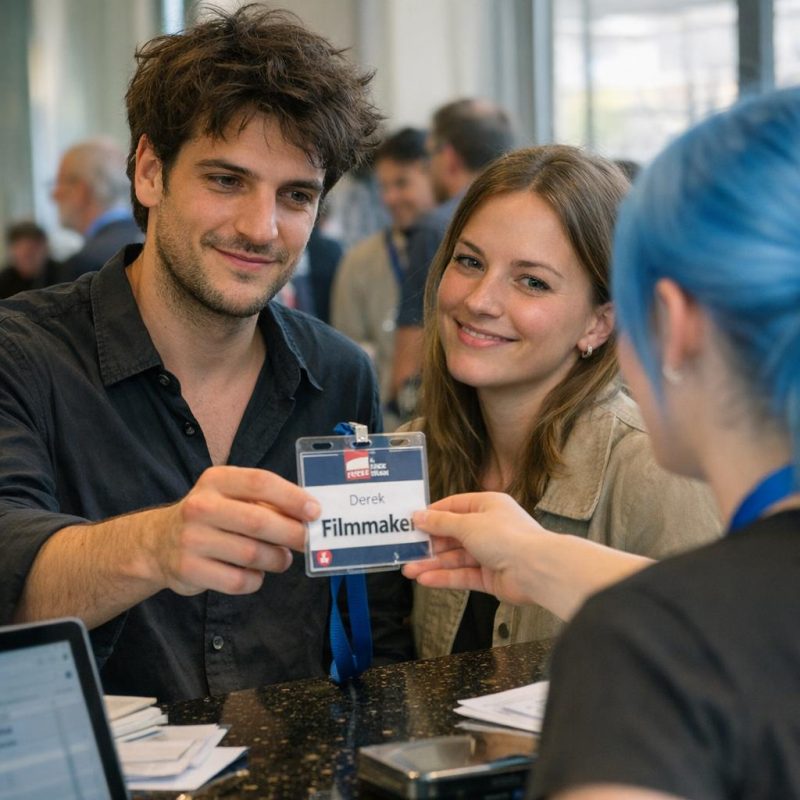 Image by RM AI
The Screening
I've never felt so exposed as I did sitting in that old theater with its worn red velvet seats, watching strangers file in to see our film. My kitchen, my grief, my life—all projected twenty feet tall for people who didn't know me from Eve. Derek couldn't sit still, pacing the lobby like a nervous father in a maternity ward, checking his phone every thirty seconds as if it might offer some escape. "What if they walk out?" he whispered when he finally slid into the seat beside me. I squeezed his hand and felt it trembling. When the lights dimmed and Eleanor's haunting score filled the theater, I held my breath so long I nearly passed out. But then something magical happened—the audience began to react. They gasped when the pantry door creaked open. They laughed at Tessa's perfectly timed comic relief. During the scene where my character finally confronts her grief, I heard sniffling from somewhere behind us. A woman two rows ahead dabbed at her eyes with a tissue. These strangers were feeling what we felt, seeing what we saw. I glanced at Derek's face, illuminated by the screen's glow, and watched as anxiety melted into wonder. He wasn't watching the film anymore—he was watching the audience watch his film. When the credits rolled and his name appeared, the applause started slowly, then built until it seemed to vibrate through the floorboards. What none of us expected was the distinguished-looking man who approached us afterward, festival badge swinging from his neck, with an offer that would change everything.
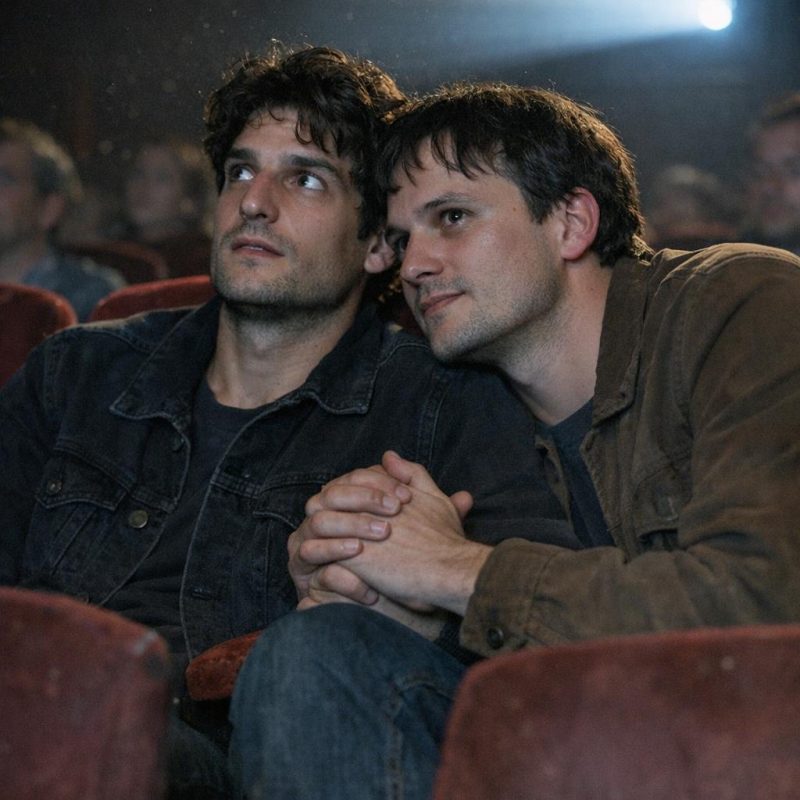 Image by RM AI
Q&A Spotlight
I never imagined I'd be the subject of attention at a film festival Q&A session. After the applause died down, the moderator invited Derek to the front of the theater. My son—who once hid behind my legs when introduced to strangers—walked to the microphone with hesitant steps. 'So, tell us about your inspiration,' the moderator began, and I watched Derek's nervous fidgeting slowly transform into animated gestures as he described our midnight kitchen encounters. 'The whole neighborhood got involved,' he explained, drawing appreciative laughter when he mentioned Sylvia's late-night dog-walking text alerts. 'We had no budget, just community.' When someone asked about the technical challenges, Derek lit up completely, describing how they'd achieved certain lighting effects with Christmas decorations and hardware store purchases. Then came the question that made my stomach drop: 'The lead actress delivered such a powerful performance. Is she professionally trained?' Derek's eyes found mine in the darkened theater. 'That's actually my mom,' he said, pointing toward me. 'She's right there.' Dozens of heads swiveled in my direction, and I felt heat rush to my face as a spotlight suddenly illuminated my seat. I managed an awkward wave, wishing I'd worn something nicer than my comfortable navy dress. After the session ended, a woman with a sleek bob and expensive-looking glasses approached me. 'I'm Elaine Winters,' she said, handing me a business card that read 'Independent Producer.' 'Your performance was extraordinary—so authentic.' She leaned closer. 'I'd love to talk to you about another project I'm developing. It's about women rediscovering themselves after loss.' What she couldn't possibly know was how her words mirrored the conversation I'd had with Robert the night before he died.
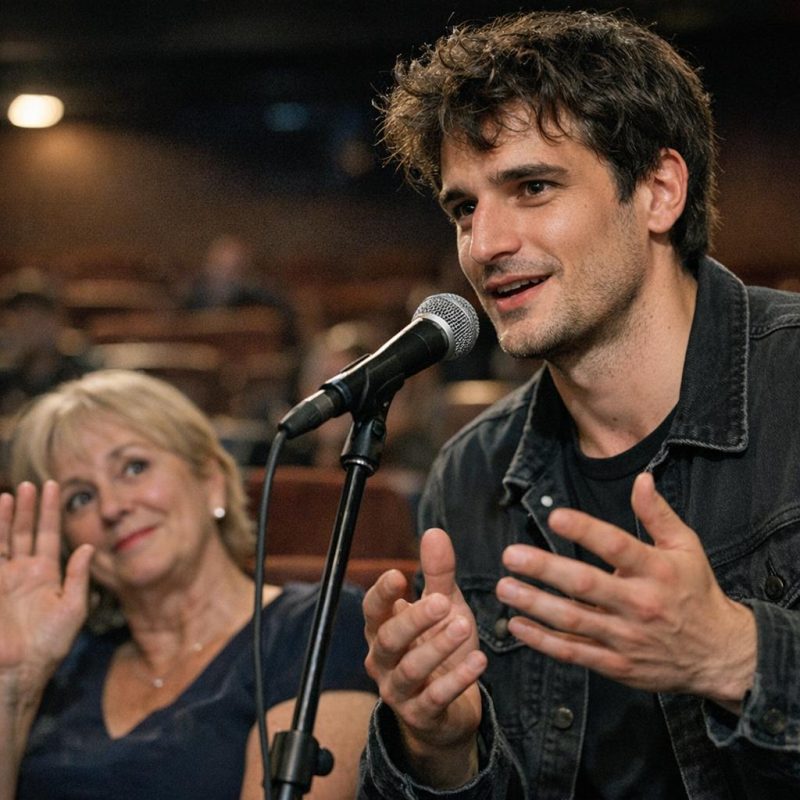 Image by RM AI
Unexpected Recognition
I never expected to be sitting in a crowded auditorium on the festival's final night, clutching Tessa's hand so tightly she had to gently pry my fingers loose. The awards ceremony felt like a formality to me—we'd already won just by being here, by seeing strangers connect with our little kitchen drama. Derek kept insisting we should leave early to beat traffic, a sure sign he didn't want to sit through announcements that wouldn't include his name. When the presenter reached the Audience Choice Award, I was half-listening, mentally planning tomorrow's drive home. 'And the winner is... The Kitchen Light by Derek Harlan!' The words hung in the air for a moment before registering. Derek sat frozen beside me, his face a perfect picture of disbelief. Tessa had to physically nudge him, whispering, 'Go! That's you!' He stumbled toward the stage like a man in a dream, his steps uncertain until the applause grew louder, carrying him forward. I watched through tears as my son—my quiet, doubtful son who'd been afraid to show his script to anyone—accepted a crystal trophy that caught the stage lights and scattered them like stars. His speech was brief, his voice steady despite the emotion I could see in his shoulders. 'This film wouldn't exist without my mom,' he said, finding me in the crowd, 'who taught me to notice everything.' The weight of that small trophy in our hands afterward felt like permission—permission to believe this wasn't just a fluke, that the story we'd created in my kitchen had truly mattered. What I didn't know then was that someone important had been watching, someone whose business card would soon change everything.
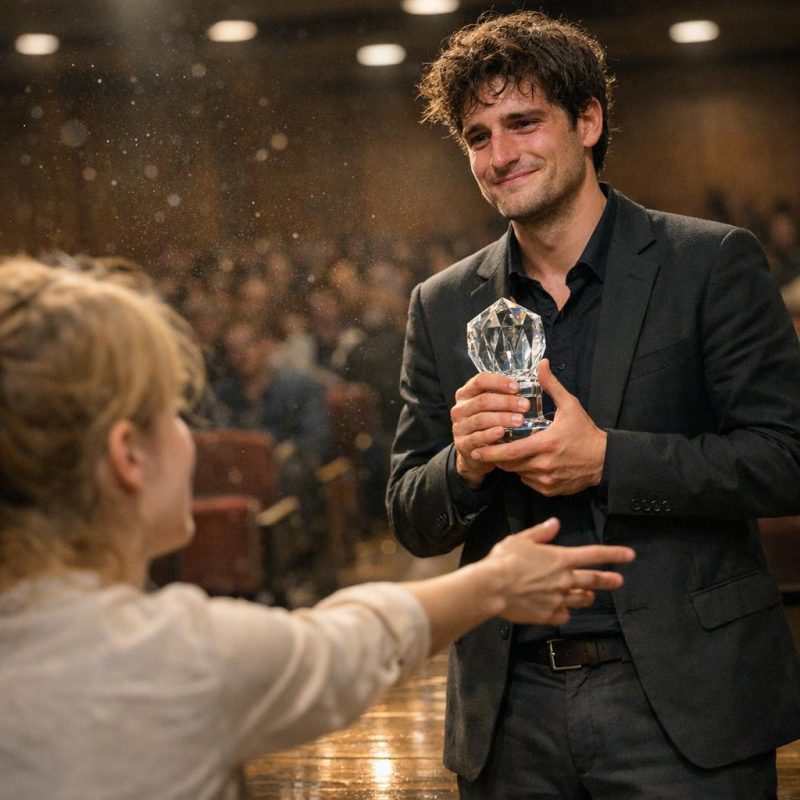 Image by RM AI
The Drive Home
The drive home feels different, like we're returning as changed people. The car is quieter now, our festival excitement settling into something deeper. Derek sits beside me, occasionally breaking the silence to read aloud emails from filmmakers and producers he met. 'This one wants to collaborate on a short,' he says, his voice still carrying a hint of disbelief. 'And this woman from Portland wants to know what camera we used for the kitchen scene.' I smile, keeping my eyes on the highway stretching before us. Tessa sketches in her notebook in the back seat, occasionally showing Derek her ideas for future projects. I listen to their plans—film festivals in Chicago, a potential internship, a screenplay competition—and feel my heart swell with pride even as it aches with the knowledge that soon, very soon, they'll be moving out. My little ranch house will return to its quiet state, with just me and the ticking kitchen clock again. 'You're awfully quiet, Mom,' Derek says, glancing over at me. I shrug, trying to keep my voice light. 'Just thinking about how much has changed since you showed up with those duffel bags.' What I don't tell him is that I've already started researching film industry events I might attend, or that I've been practicing what I'll say when I call that producer who slipped me her card after the screening. The one who whispered, 'We need more authentic voices like yours,' before disappearing into the crowd.
 Image by RM AI
New Beginnings
I stood in the doorway of the guest room, now stripped of Derek and Tessa's presence, and felt that familiar hollowness creeping back. Two weeks after our festival triumph, they'd found a small apartment near the production company that had hired Derek. 'It's only fifteen minutes away, Mom,' Derek had assured me over lasagna when they broke the news, his eyes both excited and apologetic. 'We'll come for Sunday dinners every week.' I'd smiled and nodded, because that's what mothers do—we celebrate their wings even when our nests feel too empty. Today was moving day, and I'd spent the morning wrapping their mismatched dishes in newspaper, labeling boxes with a Sharpie that kept running dry. 'Mrs. Harlan, where should I put these photo frames?' Tessa asked, holding the pictures Derek had printed from the festival—him on stage with his award, the three of us laughing in the hotel lobby. 'In the special box,' I replied, pointing to the one marked 'Fragile—Memories.' As Derek carried the last box to his overpacked car, I pressed a housewarming gift into Tessa's hands—my grandmother's cast iron skillet, seasoned with decades of family meals. 'For your new kitchen,' I whispered, and her eyes welled up as she hugged me. Later, after they'd driven away with promises to call when they arrived, I wandered through my quiet house, running my fingers along the countertops where our film had been born. The silence felt different now—not the heavy quiet of grief, but something lighter, more expectant. I glanced at my phone, where an unread email from Elaine Winters sat waiting, its subject line both terrifying and thrilling: 'Your Next Chapter—Let's Talk.'
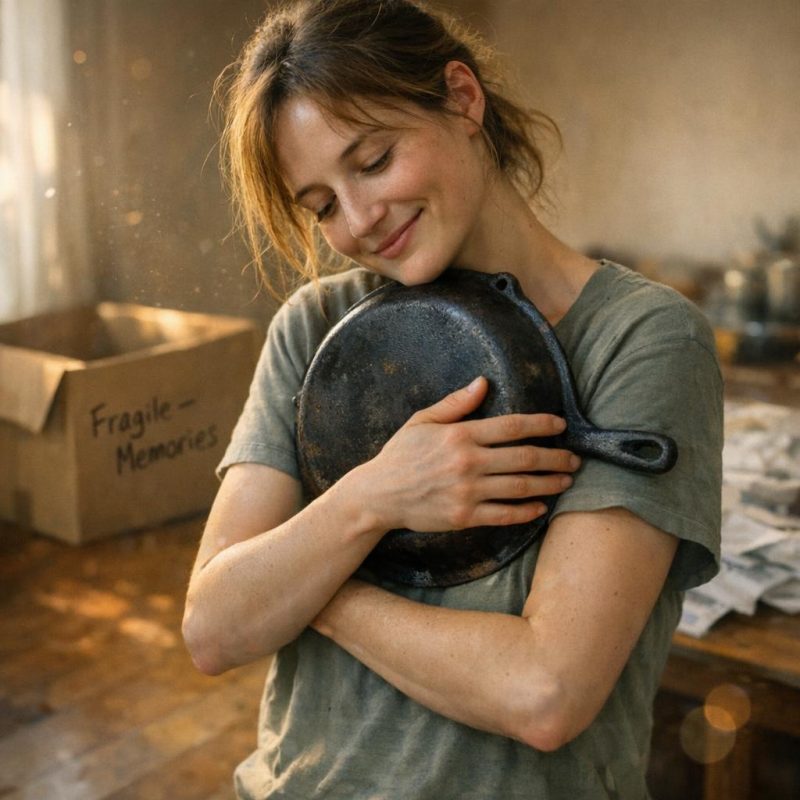 Image by RM AI
The Empty Nest
The house feels different this morning. I wander from room to room like a tourist in my own home, straightening picture frames that don't need straightening, fluffing pillows that are already perfectly fluffed. It's been exactly twenty-four hours since Derek and Tessa drove away with their lives packed into cardboard boxes and garbage bags. Twenty-four hours of just me and the ticking kitchen clock that suddenly seems as loud as a drumbeat. At 1:48 AM last night, I found myself standing in the kitchen, coffee mug in hand, half-expecting to hear Tessa's whispered directions or the soft click of Derek's camera tripod. The silence was so complete I could hear the refrigerator humming. But here's the strange part—I don't feel the crushing emptiness I expected. Instead, there's this peculiar lightness, like the house is holding its breath, waiting. I run my fingers along the counter where fake blood once pooled, remembering how my quiet, predictable life transformed into something unexpected. The pantry door still has a tiny scratch from where we mounted the 'ghost light' for that pivotal scene. These aren't just marks on my house anymore; they're evidence that these walls can contain magic. This morning, I pulled Elaine's business card from my purse again, turning it over in my hands like a talisman. 'Your voice matters,' she'd said at the festival. 'Women our age have stories that deserve telling.' I've started a list in my notebook: 'Ideas for Next Chapter.' What Derek doesn't know is that while helping him pack, I slipped his old camera into my bedside drawer. I'm not sure what I'll do with it yet, but for the first time since Robert died, the silence doesn't feel like an ending.
 Image by RM AI
Lights, Camera, Life
Six months have passed since Derek and Tessa moved out, and my kitchen table has transformed once again. Instead of fake blood and camera equipment, it's now covered with my own script pages, coffee rings, and sticky notes filled with character ideas. Who would have thought that at 59, I'd discover a passion for screenwriting? It started as a suggestion from Elaine, who insisted my perspective was 'refreshingly authentic.' Now I meet with the Silver Screen Writers (mostly retirees with Hollywood dreams) every Wednesday at the community center. We critique each other's work over store-bought cookies and terrible coffee. My screenplay follows a widow named Helen who rediscovers herself when her son temporarily moves home—not exactly subtle, I know. Derek and Tessa still come for Sunday dinners, bringing industry gossip and gentle feedback on my latest pages. 'Mom, this dialogue is gold,' Derek said last week, highlighting a scene I'd written at 2 AM when sleep wouldn't come. 'It's exactly how real people talk.' The house still quiets when they leave, but I've learned to hear the silence differently now. It's not emptiness anymore—it's possibility, a blank page waiting for words. Sometimes at night, I stand in my kitchen with the lights off, remembering how terrified I was when I found Tessa covered in fake blood. How that moment of fear became the turning point that changed everything. What nobody knows yet is that I've started filming little scenes with Derek's old camera, just experiments really. Nothing worth showing anyone. At least, that's what I keep telling myself.
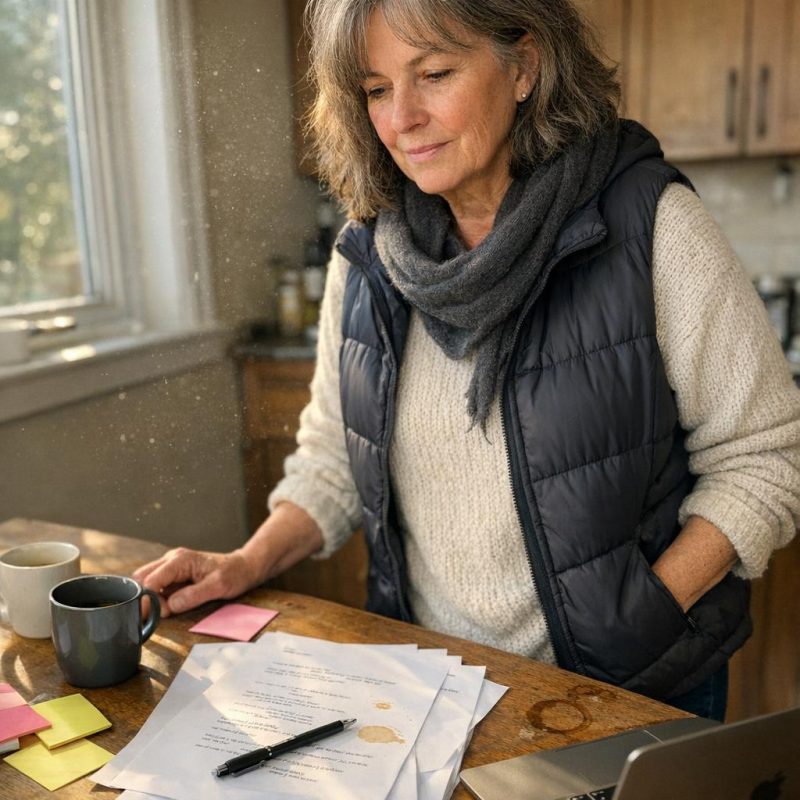 Image by RM AI