Food photographers on SpicyChefs tend to discover the same thing: the hard part isn't taking the pictures. It's making forty of them sit together in a way that doesn't look like you just emptied your camera roll into a folder and called it a gallery.
There's a moment, staring at an upload interface for the first time, when you realize the platform isn't going to hold your hand through this. It'll accept your files cheerfully and then let you figure out why the result looks wrong. This particular test run started with dinner party photos.
Roasted chicken from three angles, candlelight catching wine glasses, close-ups of the side dishes that everybody kept asking about. Beautiful individual shots. The question was whether they'd behave as a set.
Food photographers on SpicyChefs tend to discover the same thing: the hard part isn't taking the pictures. It's making forty of them sit together in a way that doesn't look like you just emptied your camera roll into a folder and called it a gallery. There's a moment, staring at an upload interface for the first time, when you realize the platform isn't going to hold your hand through this. It'll accept your files cheerfully and then let you figure out why the result looks wrong. This particular test run started with dinner party photos. Roasted chicken from three angles, candlelight catching wine glasses, close-ups of the side dishes that everybody kept asking about. Beautiful individual shots. The question was whether they'd behave as a set.
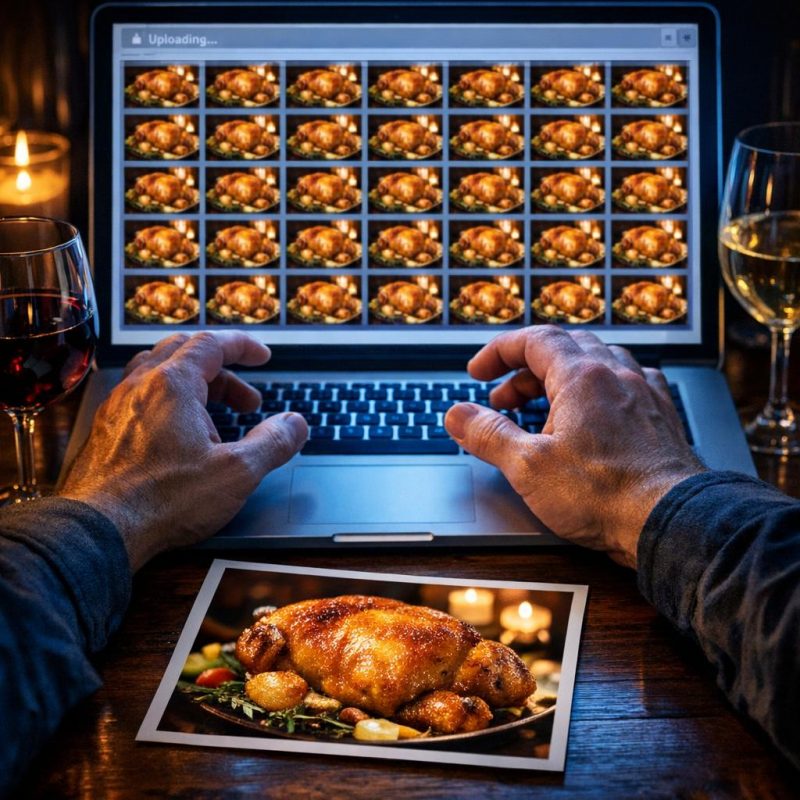 Image by RM AI
When scattered photos become a collection problem
Drag and drop. Previews appear in a grid. Looks fine for about four seconds, until you notice three of the images are different shapes. One square, two landscape, now sitting next to each other like they don't know each other at a party. That's when the actual decision-making starts. Crop everything to match and you lose the edges of frames you actually composed deliberately. Leave the inconsistency and the whole grid reads as accidental rather than intentional. SpicyChefs won't force you into a single format, which sounds like a feature until the freedom starts feeling less like flexibility and more like rope. Food photography tends to work better when every image shares roughly the same width-to-height ratio, whatever that ratio is, because a consistent shape is what makes a grid look like a gallery rather than a scrapbook. Pull out your phone about thirty seconds after you're happy with the desktop version and you'll immediately see a second problem. That neat four-column layout becomes one long vertical scroll. Each image now takes up the full width of a small screen. Things that looked balanced on a laptop look cramped and strange on a phone, and they're doing it to your carefully arranged dinner party photos right now.
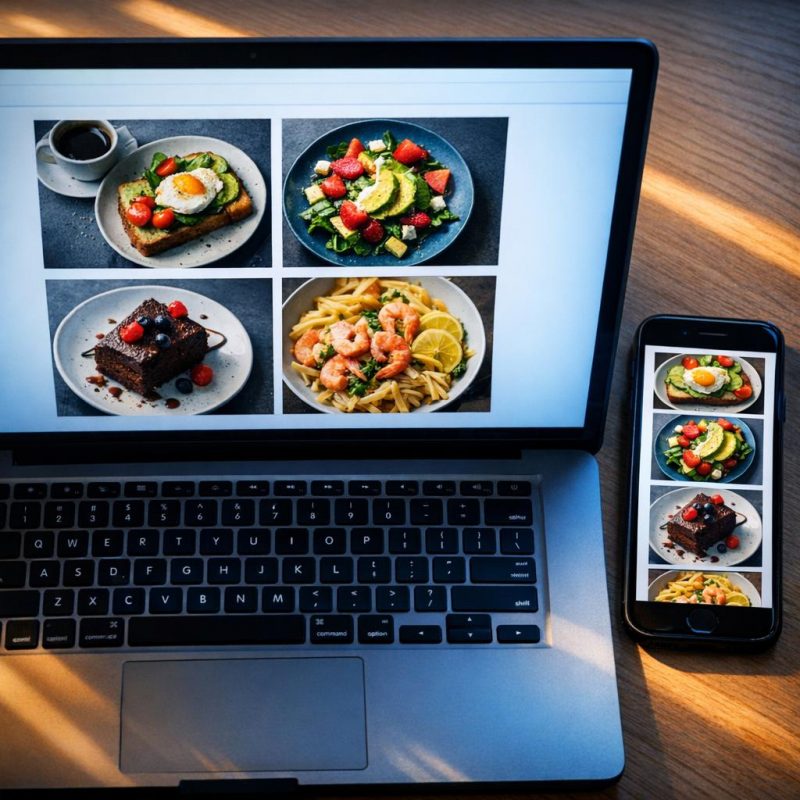 Image by RM AI
The mechanics of making images behave
The instinct with high-resolution files is to upload them as-is, because you want everything to look sharp. And it does. First image renders crisply, second one too, but by image six or seven there's lag. Several seconds before the next frame fully loads, long enough to feel genuinely annoying, long enough that you find yourself thinking about how many people would've already scrolled away. So you go back, compress, re-export at lower file sizes, and upload again. The difference is immediate. The gallery loads in under a second. That small technical fix is the whole thing, really: a gallery that takes four seconds to load on mobile might as well not exist, because most people won't wait. Captions are their own problem, and this is where a lot of creators go wrong without realizing it. "Roasted chicken with herbs and vegetables" written underneath a photo of a roasted chicken with herbs and vegetables is doing nothing for anyone. The caption that replaced it, "This took three hours but lasted about fifteen minutes at the table," does what captions are actually supposed to do: it adds something the image can't show by itself. Alt text lives in a different field and serves a completely different function. Screen readers need a description of what's actually visible in the image. Search engines index it. So the alt text describes the food, the framing, what's in the frame, while the caption carries the story. Two fields, two purposes, and mixing them up leaves gaps that are invisible to you but obvious to anyone relying on assistive technology.
 Image by RM AI
Stepping back to see what you built
The gallery goes live. On a laptop it looks genuinely good: all landscape, same aspect ratio, images moving in sequence rather than competing with each other. Then you pick up your phone and the captions are covering half the screen. They were conversational on a large display. On a small one they're just long, eating into the image space they were supposed to complement. So you go back in, trim them, reload. Testing across devices catches things that looking at one screen just won't, and it catches them every time. Filling in metadata fields is the least glamorous part of this whole process and also genuinely not optional. "Dinner party food," "roasted chicken presentation," those are the phrases that make the gallery findable. Somebody searching SpicyChefs for inspiration, somebody using a screen reader who'd otherwise just hear "image, image, image" cycling past them: both of those people are real, and the metadata is what connects them to what you built. By the end of the test run, the problems that weren't obvious at the start are now hard to unsee. Mismatched aspect ratios create visual noise that undermines everything else. Missing alt text is an accessibility failure that's completely invisible in normal browsing. And slow load times on mobile don't degrade the experience gradually, they end it before it gets going. The test caught all three of those. That's what test runs are for. Viewing the finished gallery on both screens, images loading fast, captions short enough to enhance rather than crowd the photos, it finally looks like what it was supposed to be. Forty scattered shots of one dinner party, sitting together as a collection that someone could actually browse and enjoy.
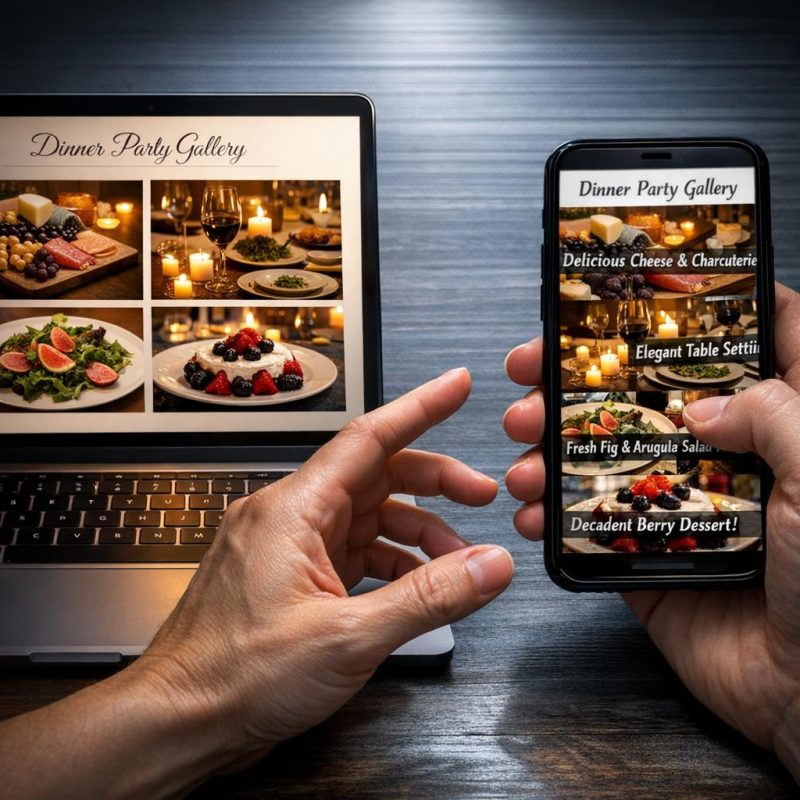 Image by RM AI
KEEP ON READING

Wagging Tails and Wiggly Noses
Atanas test
40 Cool Facts About Ancient Greece That…
40 Rare Cars Still On The Road…