
There's a particular kind of embarrassment that comes with holding a plastic bag of food you can't identify in a market at six-something in the morning while the person next to you eats the same thing without once looking up from their bowl. You pointed at it because someone else had it. The vendor handed it over with a look you still can't fully interpret.
The broth was darker than anything you'd eaten the previous night, the smell sharper, almost medicinal, and the woman across the folding table, floral shirt, efficient spoon, zero ceremony, glanced at you once and then went back to her breakfast. That single glance, honestly, taught you more about where you were than a week of rooftop restaurants did. The food you came looking for wasn't in the guidebook.
That's not a criticism of guidebooks so much as a statement of physics: the places worth knowing rarely survive the publication cycle.
There's a particular kind of embarrassment that comes with holding a plastic bag of food you can't identify in a market at six-something in the morning while the person next to you eats the same thing without once looking up from their bowl. You pointed at it because someone else had it. The vendor handed it over with a look you still can't fully interpret. The broth was darker than anything you'd eaten the previous night, the smell sharper, almost medicinal, and the woman across the folding table, floral shirt, efficient spoon, zero ceremony, glanced at you once and then went back to her breakfast. That single glance, honestly, taught you more about where you were than a week of rooftop restaurants did. The food you came looking for wasn't in the guidebook. That's not a criticism of guidebooks so much as a statement of physics: the places worth knowing rarely survive the publication cycle.
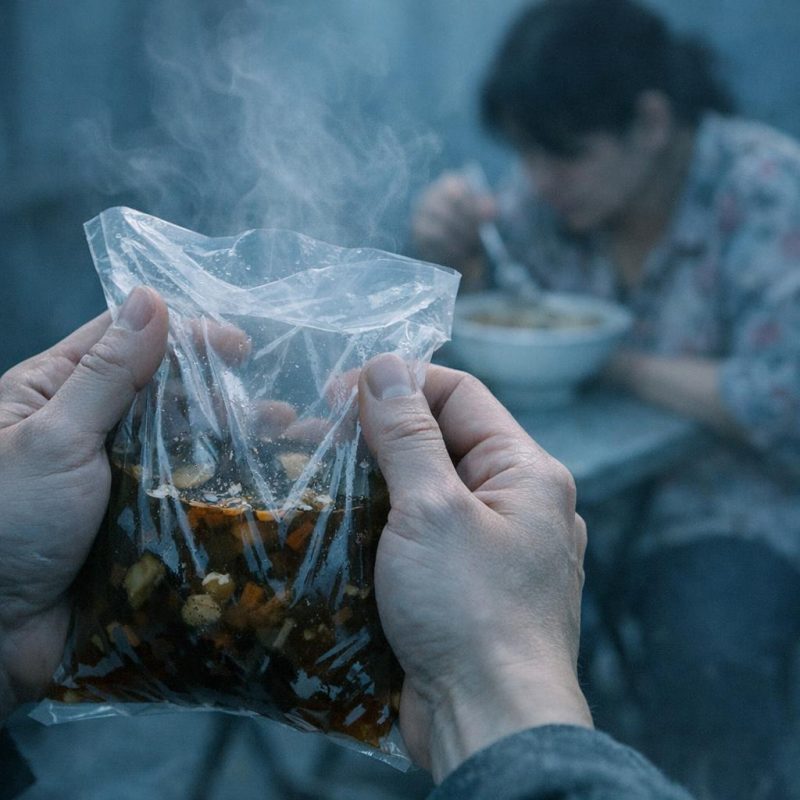 Image by RM AI
When the menu doesn't match the street
Two blocks from where you slept, there was a restaurant serving khao soi for roughly four times the price you'd later pay for it at a market stall. The ceramic bowl, the garnishes arranged like a magazine cover, the English-language description invoking "traditional northern Thai flavors", all of it was fine, and none of it tasted like the styrofoam-bowl version ladled out to a woman eating between errands at half past seven in the morning. You only know this because you got lost and hungry on the same morning. The thing nobody tells you about eating where locals eat is that the timing is the whole game. The stall that feeds forty people before eight has maybe a quarter of those left by nine, and if you wander over at noon hoping the kitchen is still open, you'll find a vendor wiping down a folding table and looking at you with the polite patience of someone who has explained this before in a language you don't speak. Breakfast means actual breakfast hour. Lunch starts at eleven-thirty and means it. You show up when the place is full of people who aren't taking photographs, who are eating quickly and mostly alone because they have somewhere to be, and you realize that the pace of the meal is also information. The woman at the curry stall didn't ask questions. You pointed at what the man beside you was having, she ladled it, you paid less than a dollar, and the whole transaction lasted maybe fifteen seconds. Functional. Unremarkable to everyone except you.
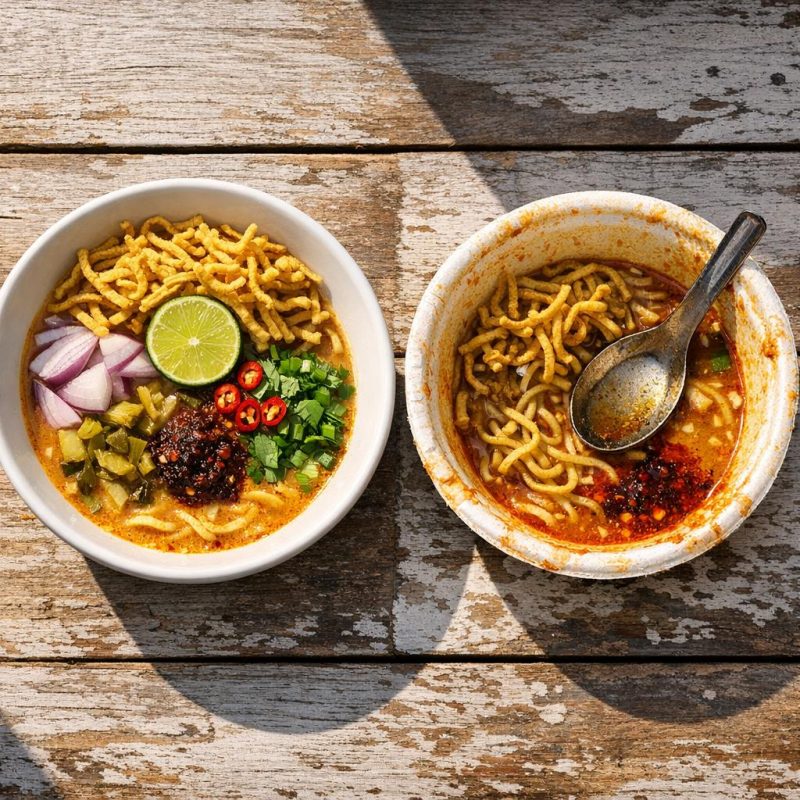 Image by RM AI
The cook who's been making the same thing since 1987
The roti maker in Penang was probably in his mid-sixties, and he worked his dough with the particular kind of boredom that only looks like boredom from a distance. Up close it was something closer to complete absorption. When you asked how long he'd been at the corner stand, he didn't catch it at first, and his daughter translated, and he laughed in a way that suggested he found the question a little odd: since he was nineteen, he said. His father taught him. You do the math while he flips the next round. Thirty cents for the roti. Three dollars at the place three streets over with air conditioning and an English menu, which his daughter mentioned with the flat affect of someone stating a weather fact rather than a complaint. Tourists walk past him looking for "authentic Malaysian food," she said, and she didn't bother finishing the sentence. The difference between his roti and the other place's is real, though you wouldn't have tasted it before this trip. Thinner dough, crisper at the edges, still somehow soft through the middle. You could try to explain it technically but honestly you think the explanation is that he's done this particular motion ten thousand times and still, visibly, gives a damn whether it lands right on the griddle. It does. Every time.
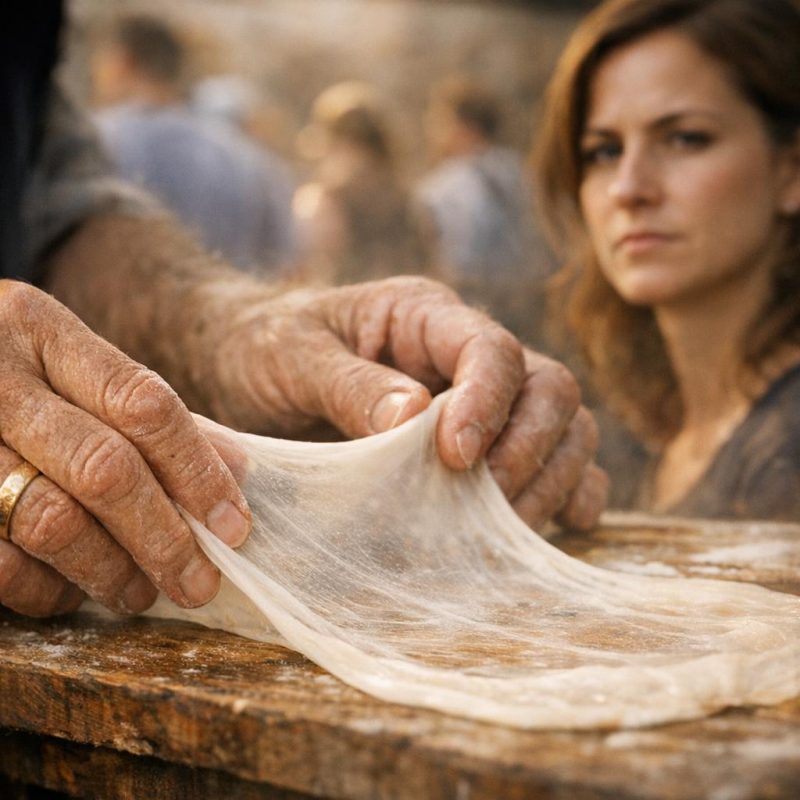 Image by RM AI
Figuring it out wrong, then right
The first attempt was a disaster of mild proportions. You pointed at something you were about ninety percent sure was chicken. It was fish, and not just fish but fermented fish, and the vendor watched you work through it with an expression that was either amusement or professional neutrality. You finished it. Partly because you paid for it and partly because deciding midway through to quit felt worse than whatever you were tasting. The second attempt went better by accident. A woman next to you said something to the vendor, he nodded, and suddenly you were eating what she was having rather than whatever you'd managed to gesture at. You thanked her in broken Thai. She answered in perfect English, told you the dish you'd ordered was only worth eating if they made it fresh that morning since it got heavy sitting through the afternoon heat, and mentioned that she'd been coming to this stall for six years despite living forty minutes out of the city. She finished her food, paid, and left before you could think of anything useful to say. After a few days you start mapping patterns onto the chaos. The good places don't have signs you can read and don't keep hours that accommodate sleeping in. They're open for three or four hours at fixed points in the day, they're consistently packed with people who aren't consulting their phones about whether to trust the hygiene, and they're better, almost without exception, than any establishment marketing itself to foreigners with the phrase "home cooking." You learn to eat when people who actually live there eat, which means early and often and without a lot of fuss about what anything is called. By the end of the week you have a short list of places you'll carry home in some form that isn't a photograph. The curry vendor who, on day three, added chilies without being asked because she'd apparently filed you away as someone who could handle it. The roti maker's daughter teasing him in Hokkien while he worked, and him ignoring her with a grin. What you remember isn't exoticism, it's the sensation of a place becoming briefly legible, of eating the way the city actually eats rather than the way it performs eating for visitors. You got it wrong before you got it right. That was more or less the whole education.
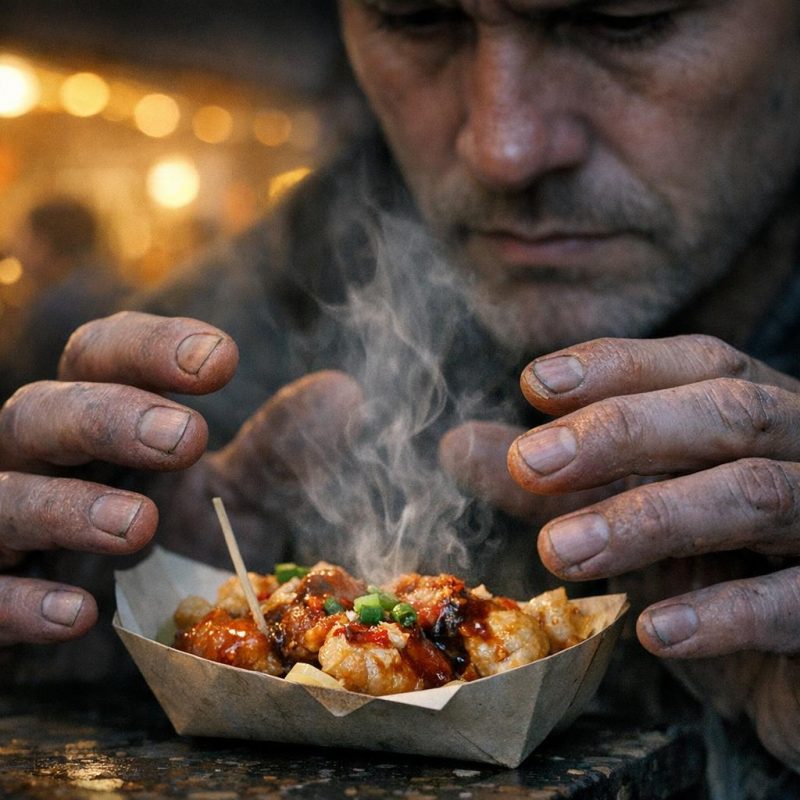 Image by RM AI